

Best known to horror audiences for his performances in Hellraiser, Hellbound: Hellraiser II and Clive Barker's Nightbreed, British actor Simon Bamford has spent much of his career bringing extraordinary characters to life. Away from the elaborate makeup and physical transformations associated with those performances, a portrait session offers an opportunity to explore the person behind the characters.
Photographed by Team Light Lab on Rollei RPX black-and-white film, this session brought together three classic photographic systems, available light and Simon's considerable experience as a performer. With artificial lighting, stands and tripods prohibited at the location, the portraits depended on careful observation, natural reflections and the relationship between photographer and subject.
The exposed negatives were developed in Zone Imaging 510 Pyro and scanned at Liquid Light Lab, creating a series that connects professional portrait photography with the specialist film processing and digitisation required to reproduce the finished images.
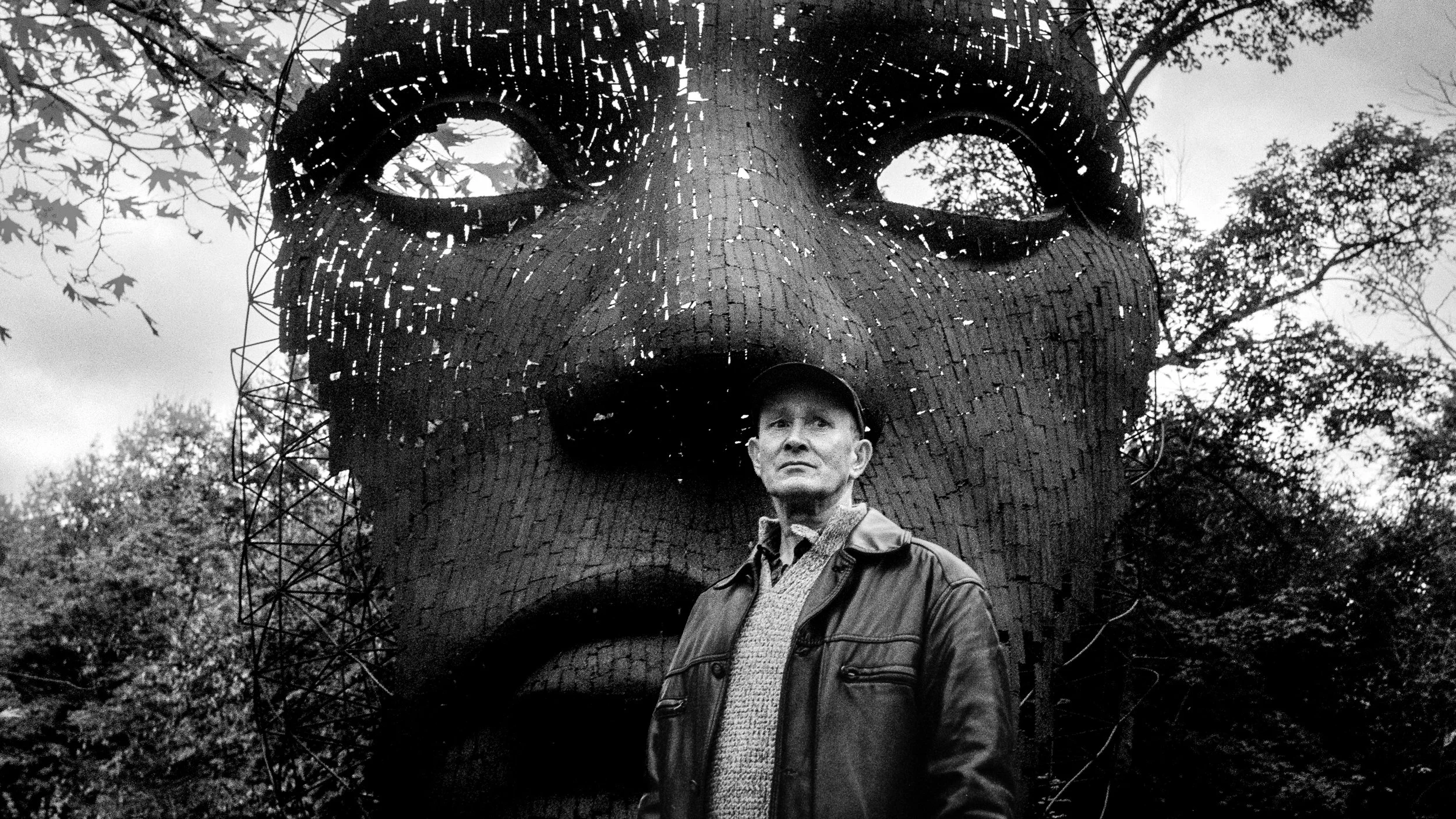
Simon Bamford beneath the large sculpted face, its scale contrasting with his restrained expression. Photographed on Rollei RPX 400 using a Canon F-1 and Asahi Takumar 85mm f/1.8.
Simon Bamford: The Performer Behind the Characters
Simon's work in horror cinema is instantly recognisable to audiences familiar with Clive Barker's films. The extraordinary visual world of Hellraiser relied on physical performance as much as makeup and special effects. Beneath the elaborate characters were actors required to communicate through movement, posture and carefully controlled expression.
Simon's theatrical background is particularly relevant to that work. Stage performance requires an awareness of physical position, timing and the relationship between an actor and the surrounding space. These same qualities became apparent during our photographic session.
The objective was not to recreate his screen characters or produce conventional promotional photographs. We wanted to explore how his experience as a performer could inform a series of portraits that revealed different aspects of his personality. Some photographs carry the intensity associated with his film performances. Others reveal humour, warmth and a more reflective character.
Working with someone who understands the language of performance creates opportunities that are difficult to prescribe in advance. The photographer can establish the lighting and composition, but the subject contributes the expression and presence that bring the photograph to life. For this session, that relationship was particularly rewarding.
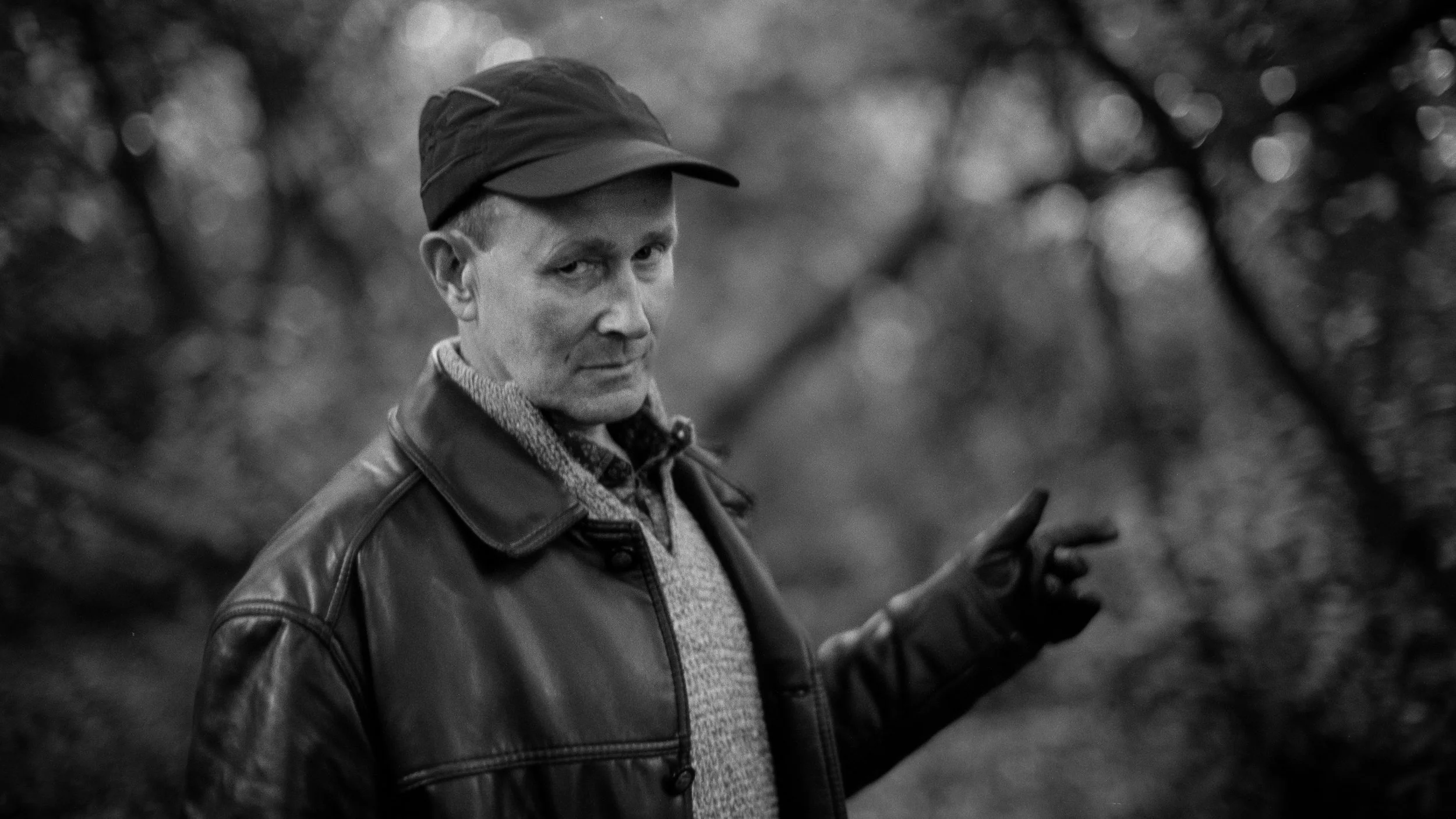
A pause in conversation, with Simon’s relaxed posture giving way to a more intense gaze. Photographed on Rollei RPX 100 using a Leica M3 and Voigtländer Nokton 50mm f/1.1.
A Professional Portrait Session Without Studio Lighting
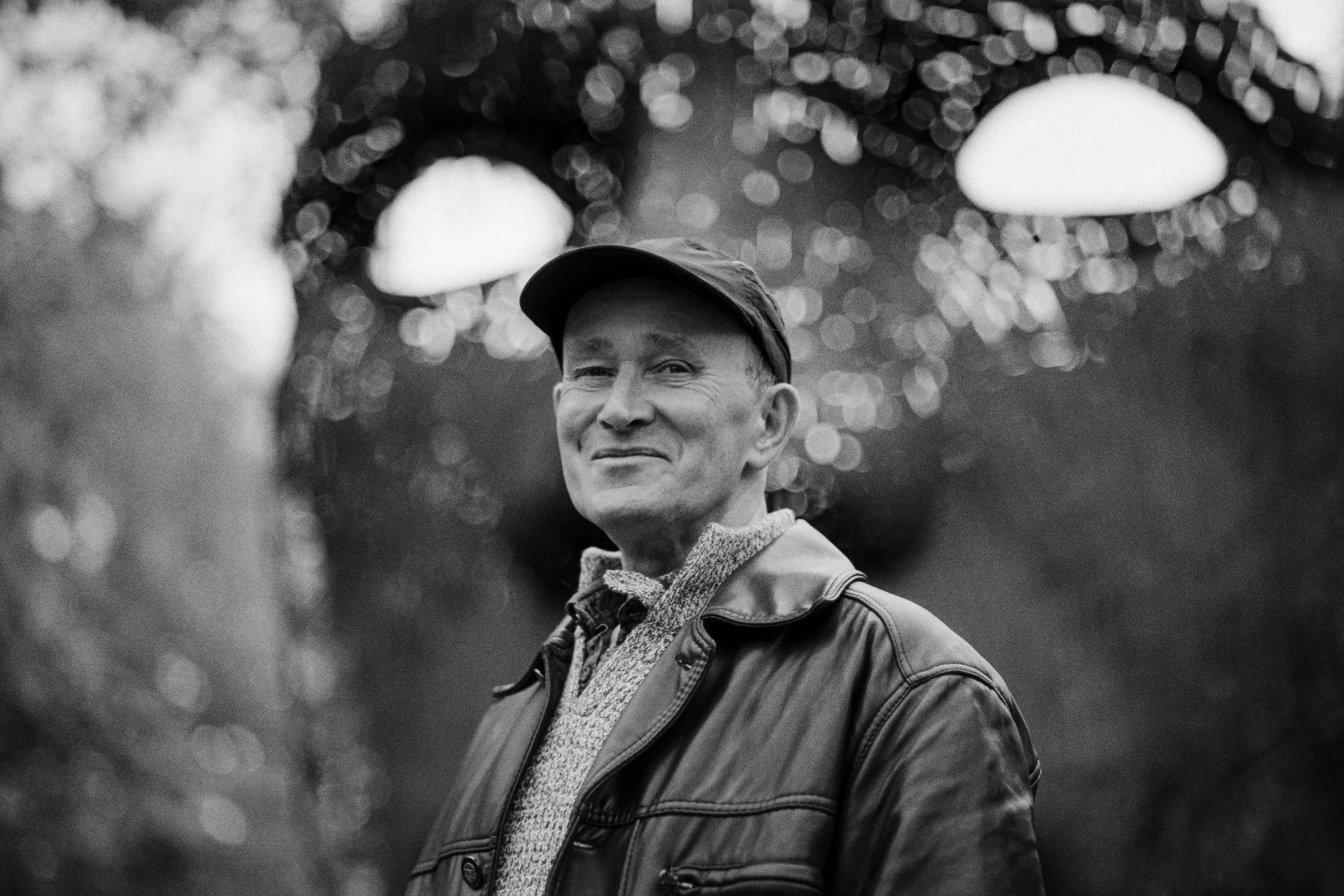
A lighter moment during the session. Available light catches Simon’s expression, while the softly rendered background keeps attention on his face.
The location imposed an unusual restriction: no artificial lighting, lighting stands or tripods were permitted. Much of Team Light Lab's professional portraiture involves deliberately constructed lighting, using modifiers and controlled sources to establish the desired contrast and direction. Without that equipment, the surrounding environment became central to the photographic decisions.
We worked outdoors during the late afternoon, using the available light and the reflections created by nearby architectural surfaces. A pale wall provided a useful source of reflected illumination, returning light towards Simon's face and allowing selected details to remain visible within otherwise subdued conditions. The ground contributed additional fill, while changes in positioning altered the relationship between the illuminated and shadowed areas.
As the sun declined, those relationships changed continuously. Rather than attempting to maintain one lighting arrangement throughout the session, we adjusted our position and Simon's orientation to work with the illumination available at each moment.
This required close observation of how the light moved across his face, particularly when working with the stronger contrasts that characterise black-and-white portraiture.
For professional photographers, the exercise illustrates a familiar principle. Equipment provides opportunities, but understanding light is what allows those opportunities to be used effectively.
The resulting negatives record decisions made under genuine location constraints, rather than a lighting arrangement constructed exclusively for a technical demonstration. For more on how illumination and shadow establish facial form, explore the foundations of directional light on film.
Working With Simon: Expression, Timing and Trust
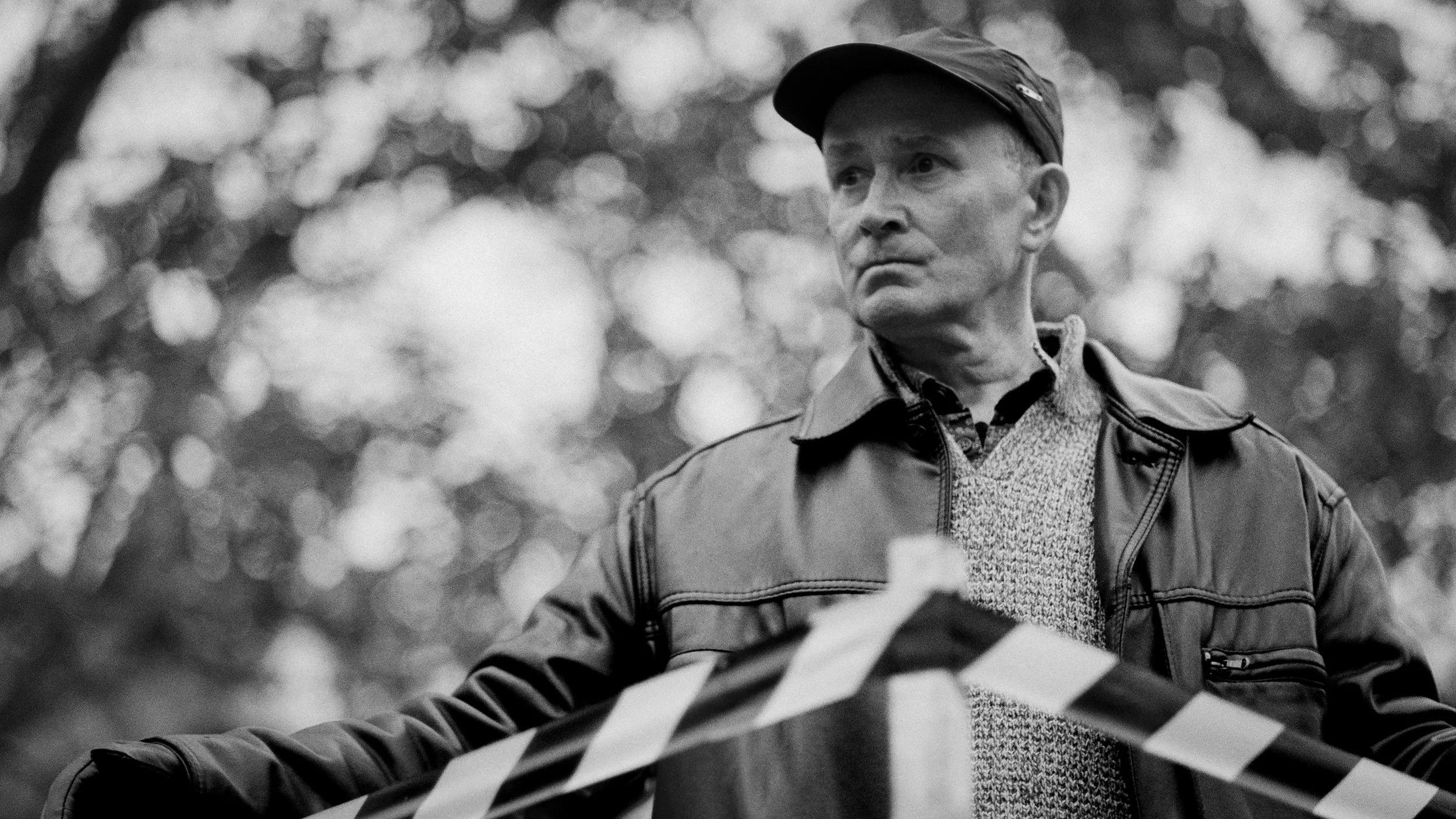
Simon brings his theatrical instincts into the frame. His outstretched arms and the crossing lines of barrier tape create tension within the composition. Photographed using a Canon F-1 and Asahi Takumar 85mm f/1.8.
Photographing an experienced actor introduces a different rhythm to a portrait session. Simon was particularly attentive to small changes in posture and expression. A slight movement of the head or a change in the direction of his gaze could alter the character of an image without requiring a new composition.
This understanding allowed us to work with relatively restrained direction. Some photographs developed through deliberate positioning. Others emerged during conversation, when a moment of amusement or a spontaneous expression created an opportunity worth recording. One frame captures Simon in a lighter moment after he suspected we’d missed a photograph. It provides a welcome contrast to the more intense portraits and reveals something of the personality behind the familiar horror-film performances.
The session also demonstrated the importance of a comfortable working relationship. A photographer needs sufficient technical control to remain attentive to the person being photographed. Familiarity with the equipment, the exposure requirements and the available light allows the interaction to continue without unnecessary interruption.
Following the session, Simon offered this assessment of Team Light Lab’s work:
“Truly the best photographers I have encountered in the last 64 years. They’re consummate professionals who really understand not only the craft, but the technical wizardry that enables it. They ‘re so easy to work with.”
For Liquid Light Lab, this recognition of the professional photographic work behind the business is especially valuable. It comes from an established film-industry professional who experienced the photographic process firsthand, rather than from a general claim about expertise.
The same practical understanding of exposure, photographic materials and finished images informs our approach to film processing and scanning.

The Leica M3 used throughout much of the session. Its viewfinder shows the scene beyond the frame lines, helping us anticipate gestures and changes in expression.
Three Photographic Systems: Leica, Canon and Contax
Three different photographic systems were used during the session, allowing us to adapt framing and optical rendering to the changing light and the character of each portrait.
Leica M3 and Voigtländer Nokton 50mm f/1.1
The Leica M3 was paired with the Voigtländer Nokton 50mm f/1.1 for portraits requiring close observation of expression and timing.
The rangefinder viewfinder allowed us to watch Simon continuously, anticipating subtle changes without interrupting the flow of the session. The Nokton's wide maximum aperture also provided flexibility as the available light declined.
At wider apertures, careful focus placement becomes particularly important. The shallow depth of field can separate the subject from the surrounding environment, but demands accuracy when photographing facial features and expression.
The photographs made with this combination demonstrate the relationship between equipment familiarity and the ability to work confidently with a subject.
Canon F-1, Zeiss Pancolar and Asahi Takumar 85mm f/1.8
The Canon F-1 was used with an adapted Zeiss Pancolar 50mm f/1.8 and Asahi Takumar 85mm f/1.8. These lenses offered different framing possibilities and optical characteristics. The 85mm focal length allowed tighter portraits from a greater working distance, while the Pancolar provided an alternative 50mm rendering. Differences in flare, contrast transmission, resolution and out-of-focus behaviour can all influence the appearance of the recorded image.
The lighting itself remained a product of the environment and the subject's position. The lenses contributed their optical characteristics to the way that illumination was reproduced on film.
Contax IIa and Zeiss Sonnar 50mm f/1.5
The third combination brought together the Contax IIa and a 1939 Zeiss Sonnar 50mm f/1.5.
The early Sonnar is an optical design with characteristics that can become particularly apparent under directional or strongly contrasting illumination. Its uncoated surfaces influence flare and contrast behaviour, offering a different rendering from many modern multicoated lenses. This combination was used for quieter portraits in which Simon's expression and the relationship between light and shadow became central to the composition.
Working across three familiar systems allowed us to respond to the changing conditions while retaining control of exposure, focus and framing. For a professional assignment on film, that technical familiarity is an important part of producing consistent results.
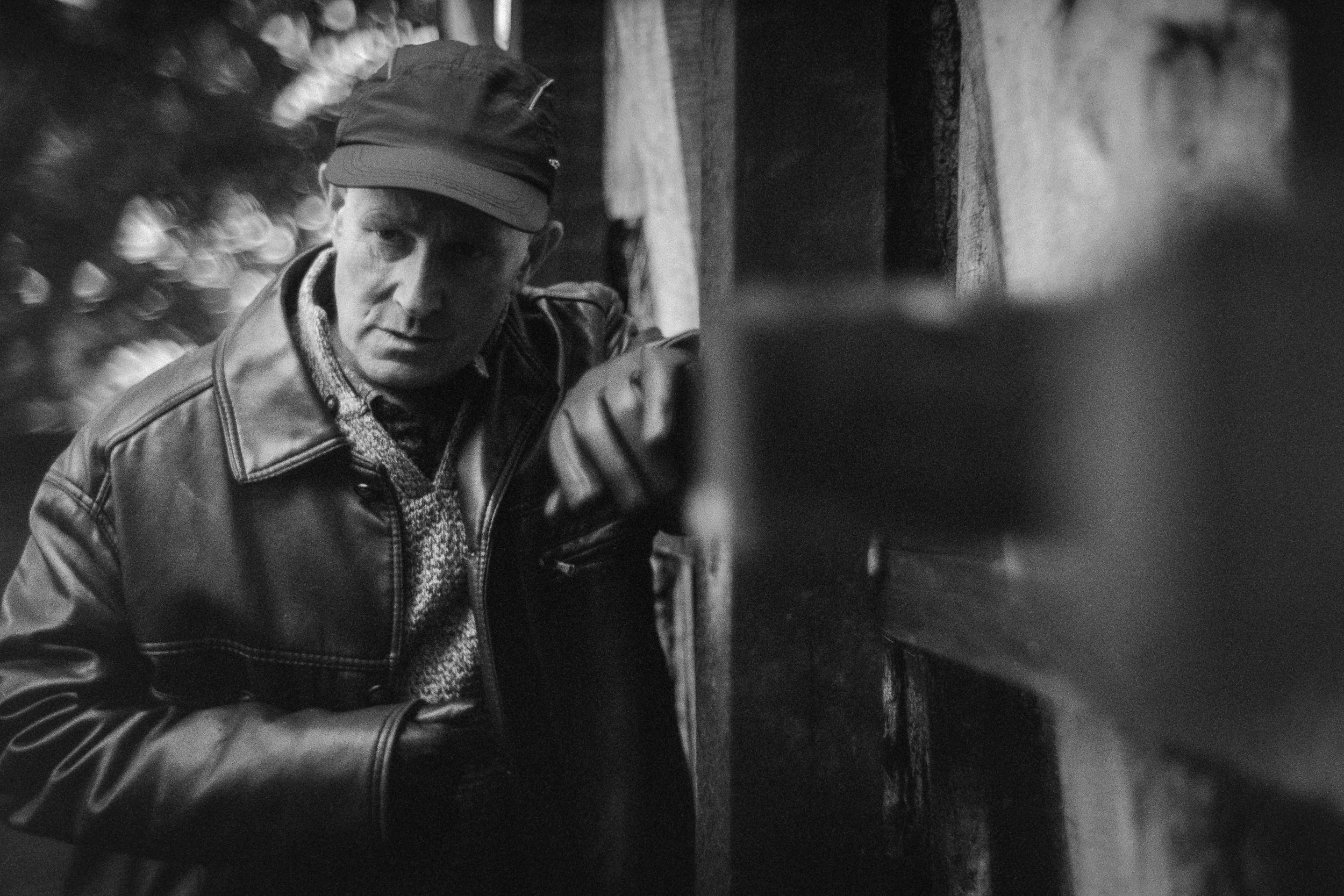
Reflected daylight gently illuminates Simon’s face against the darker surroundings. Photographed on Rollei RPX 400 using a Leica M3 and Voigtländer Nokton 50mm f/1.1.
Rollei RPX 100 and RPX 400: Recording the Available Light
All the photographs were recorded on Rollei RPX 100 and RPX 400 black-and-white film. The two emulsions provided different exposure options as the daylight changed.
RPX 100 was used while illumination remained comparatively stable, while RPX 400 offered greater flexibility as the light declined. Both films record differences in exposure through changes in the density of the developed silver image.
For directional portraiture, the relationship between illuminated skin, darker clothing and surrounding shadow is particularly important. Areas receiving more exposure generally produce greater density on a conventional negative, while less-exposed regions produce lower density.
The photographer must decide which shadows should retain useful information and which can legitimately approach black in the finished photograph. This requires confidence in exposure and an understanding of the chosen emulsion.
The negatives from Simon's session were developed at Liquid Light Lab using Zone Imaging 510 Pyro, our specialist staining developer for black-and-white film.
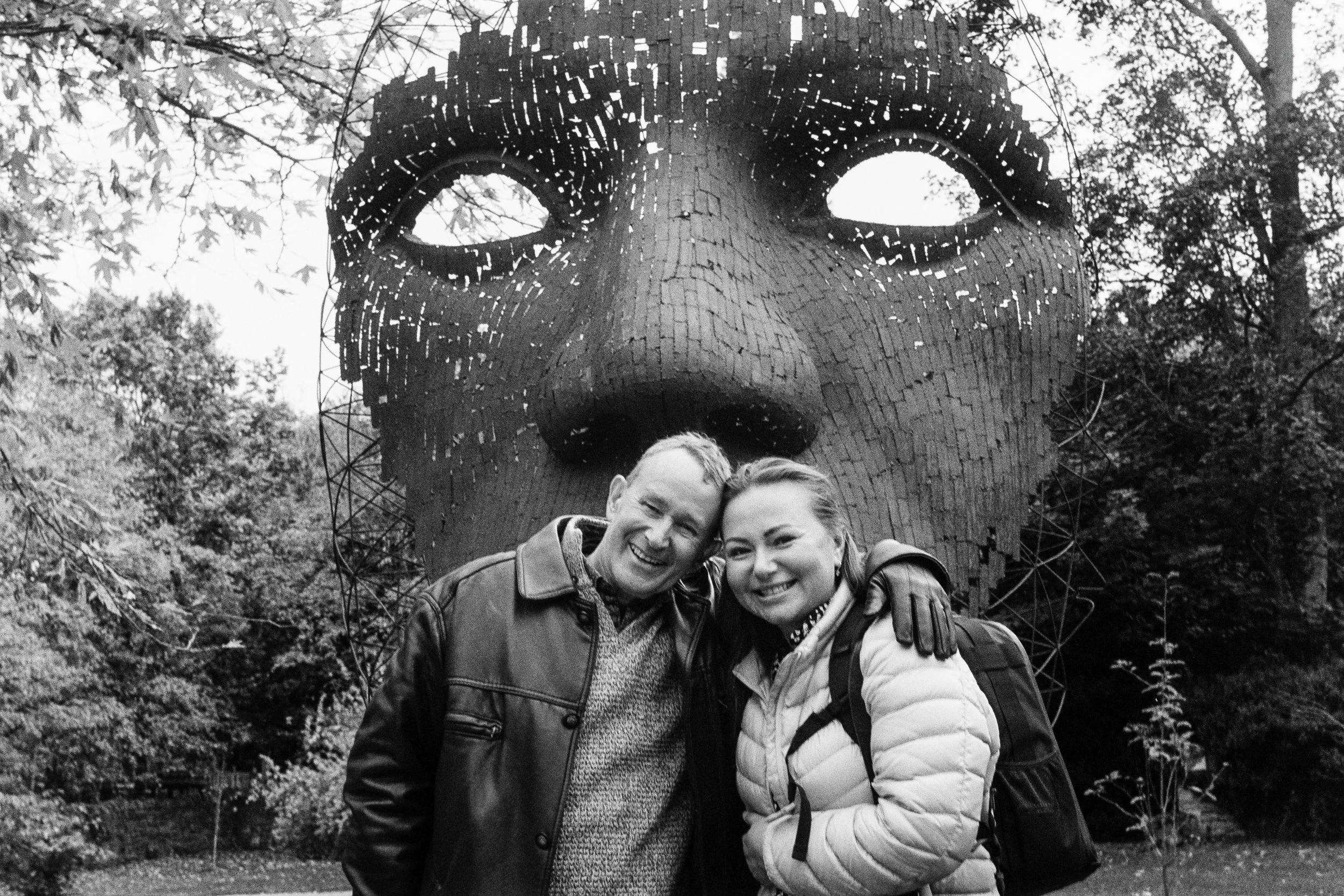
Simon with Anna, whose assistance with film changes and equipment kept the session moving across three camera systems. Photographed using a Contax IIa and a 1939 Zeiss Sonnar 50mm f/1.5.
Professional Black-and-White Development in 510 Pyro
510 Pyro produces a metallic silver image accompanied by an image stain, with the resulting negative's density characteristics influenced by the film, exposure and development conditions. The stain also has implications for subsequent reproduction, particularly when digitising negatives using different illumination spectra. These characteristics are important when working with photographs containing pronounced differences between illuminated and shadowed areas.
The purpose of controlled development is to establish suitable negative density and contrast while retaining the information recorded during exposure. For a professional photographic series, consistency across the negatives matters. Different films and changing lighting conditions already introduce variables, making reliable processing an essential part of the overall workflow.
At Liquid Light Lab, our black-and-white development is supported by practical photographic experience and a technical understanding of how film emulsions respond to exposure and chemistry. The objective is not to impose an arbitrary appearance on the negatives, but to develop them according to the selected process and provide suitable material for subsequent scanning or printing.
Our 510 Pyro black-and-white development article explores the developer's staining characteristics and their relationship with scanning in greater detail.
From Simon's Negatives to the Finished Photographs
The developed negatives from this assignment were scanned at Liquid Light Lab using our high-resolution capture, precision optics and controlled illumination to reproduce the fine detail and tonal separation recorded on the film.
For black-and-white portraiture, scanning quality has a substantial influence on the finished photograph. The smallest differences in density may represent important details in the face, clothing or surrounding environment. If the scanning system cannot adequately capture those differences, the resulting files may offer less flexibility during editing.
Professional photographers frequently require digital files capable of supporting careful tonal adjustment, enlargement and client delivery. Liquid Light Lab's standard 35mm development-and-scanning packages include approximately 60MP capture, with full-resolution JPEG and 16-bit TIFF files.
Resolution is only one consideration. The scanner's ability to reproduce negative density, tonal separation and fine detail is equally significant. The objective is to provide photographers with files that retain the information available in their negatives, allowing subsequent editing decisions to remain under their control.
With Simon's photographs, this process connected the decisions made during a demanding location assignment to the final black-and-white images. The portraits retain the contrast, expression and visual character established during the session while benefiting from specialist negative development and high-resolution digitisation.
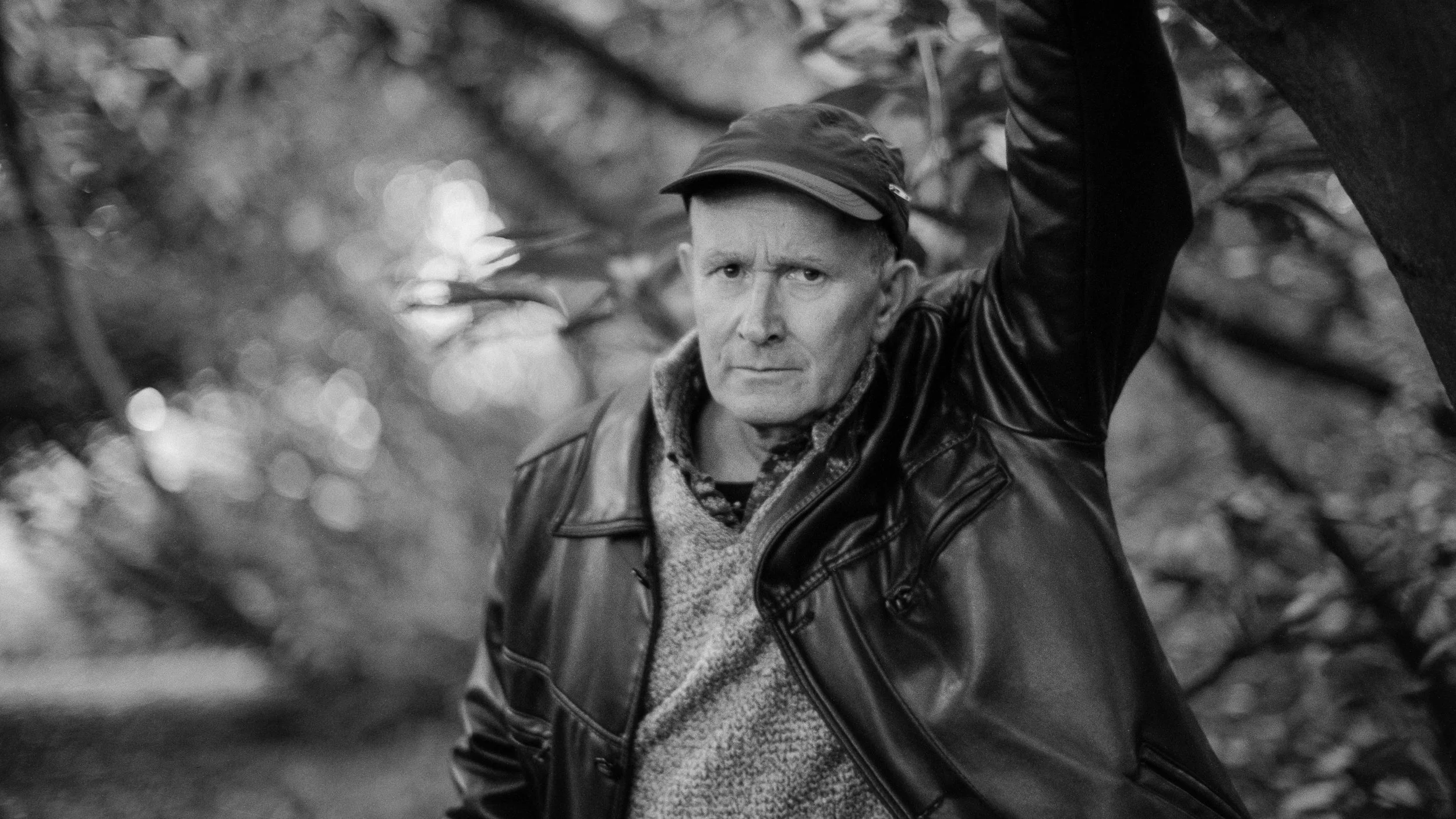
A raised arm and direct gaze bring Simon’s physical expressiveness into the portrait. Natural light reveals the facial tones and texture of his leather jacket. Photographed on Rollei RPX film using a Leica M3 and Voigtländer Nokton 50mm f/1.1.
Why Professional Photographers Choose Liquid Light Lab
The Simon Bamford portrait session represents the professional photographic experience associated with Liquid Light Lab. Our technical knowledge comes from working with photographic materials in practice, including commissioned portraiture, studio lighting, location assignments and specialist film development.
This experience is particularly relevant when processing film for other professional photographers.
A commercial assignment may involve carefully controlled exposure, demanding lighting conditions, specialist emulsions or negatives containing substantial differences in density. The photographer needs confidence that the lab understands how those conditions affect the recorded image.
Our work also extends internationally through technical partnerships with film manufacturers, including Candido Collective, contributing to film testing, exposure guidance and processing documentation. These activities complement the day-to-day work of developing and scanning customers' film.
Professional photography and laboratory processing require different skills, but both depend on understanding the photographic negative and the decisions that created it. For photographers entrusting commissioned work to an independent lab, this combination of practical experience and technical knowledge provides a meaningful basis for confidence.
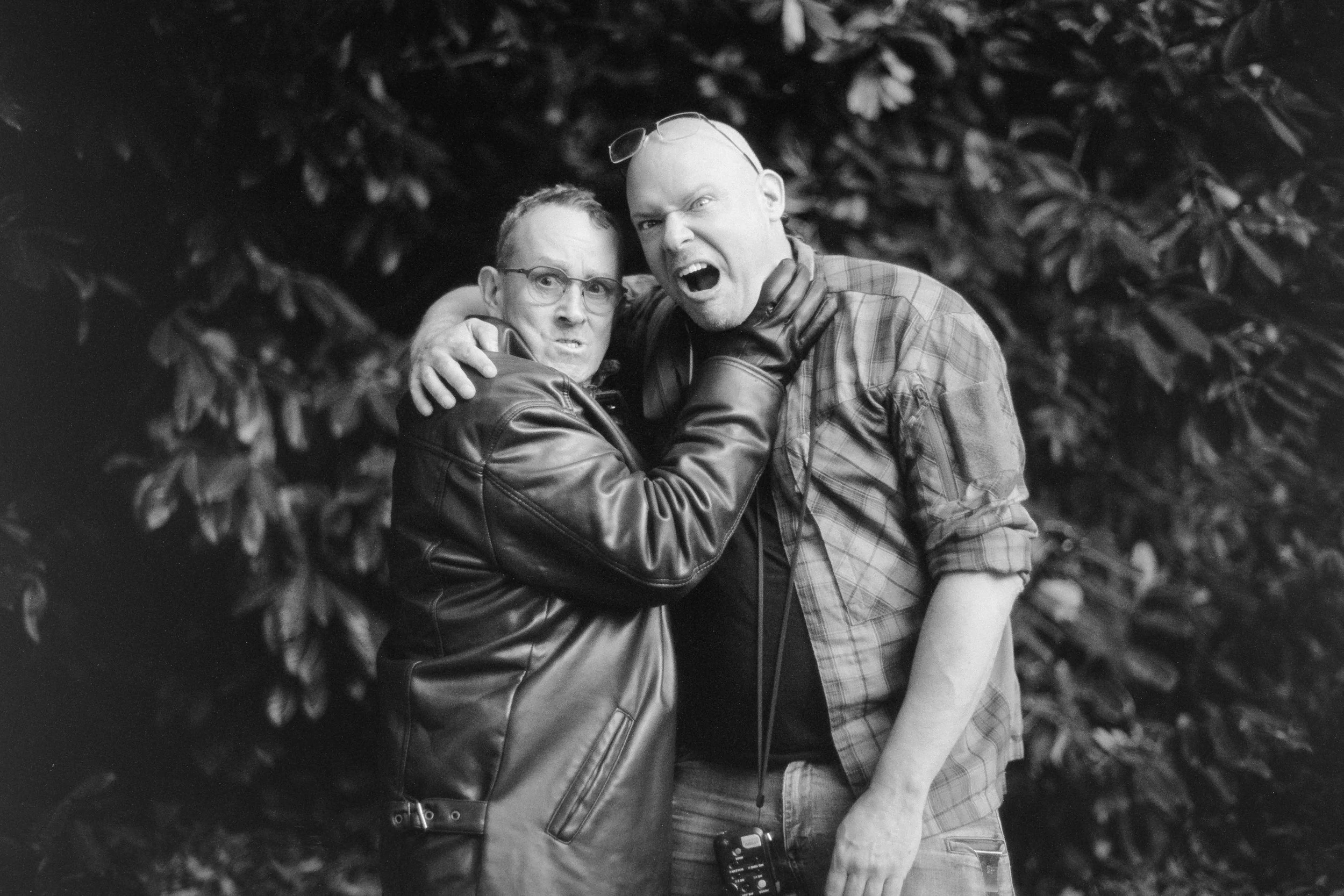
Telling a Hellraiser actor you may have missed a frame has consequences. Simon immediately slipped into character. Fortunately, the photographic evidence survived—and so did the team.
Film Development and Scanning at Liquid Light Lab
Liquid Light Lab is an independent professional film lab based in Royal Leamington Spa, providing postal film development and high-resolution scanning for photographers throughout the United Kingdom.
Our services include C-41, ECN-2 and black-and-white processing for supported 35mm and 120 films.
Development-only and development-and-scanning packages are available, allowing photographers to select the workflow appropriate to their work.
We regularly work with traditional black-and-white emulsions, cinema-derived colour-negative materials and photographs made using both historical and contemporary photographic equipment.
The portraits of Simon Bamford demonstrate the relationship between professional photographic practice and specialist film processing.
They also document a valued client relationship with a recognised figure from British horror cinema, whose experience of the photographic session reflects the standard of professional work associated with Liquid Light Lab.
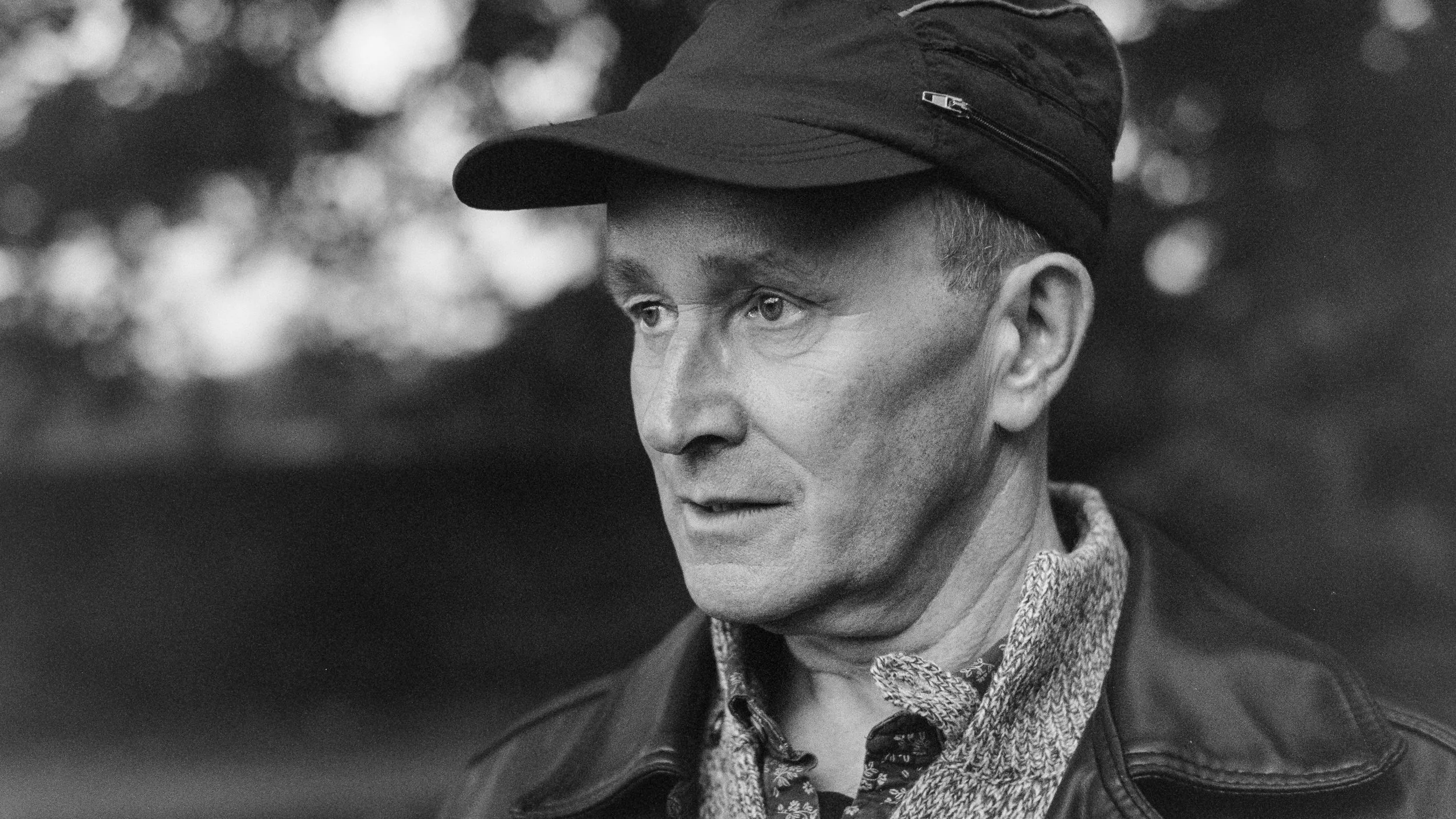
A quieter moment to close the session. Close framing and a softly rendered background draw attention to Simon’s expression. Photographed with an Asahi Takumar 85mm f/1.8; developed in 510 Pyro and scanned at Liquid Light Lab.
For photographers seeking a lab capable of handling serious photographic assignments, our approach combines controlled development, high-resolution scanning and practical knowledge of the medium.
Explore Professional Film Development and Scanning at Liquid Light Lab
Photography: Team Light Lab
Subject: Simon Bamford
Film: Rollei RPX 100 and RPX 400
Development: Zone Imaging 510 Pyro
Scanning: Liquid Light Lab
Published by Liquid Light Lab
The Cinematic Notebook | Liquid Light Lab