

Film scanning quality isn't simply a matter of personal taste. Resolution, optical precision, illumination, colour management and the way a negative is handled all influence the digital photograph a lab delivers. Two film labs can develop identical rolls of film and deliver remarkably different digital results. One set of scans may reveal fine detail, subtle tonal transitions and carefully balanced colour. Another may appear softer, more contrasty or noticeably different in colour, even though the original negatives contain the same photographic information.
Why does this happen? The answer lies in understanding the difference between capturing the information recorded in a negative and interpreting that information as a finished photograph.
Both stages matter, but they are not interchangeable. A creative adjustment can change the appearance of a scan; it cannot restore fine detail that the scanning system failed to resolve.
At Liquid Light Lab, we approach film scanning as a specialist imaging discipline. Our work spans high-resolution 35mm and medium-format scanning for photographers and precision photographic digitisation for museums, galleries and cultural institutions. Those two areas of work have different requirements, but they share a central principle: the quality of the digital image begins with the accuracy of the capture.
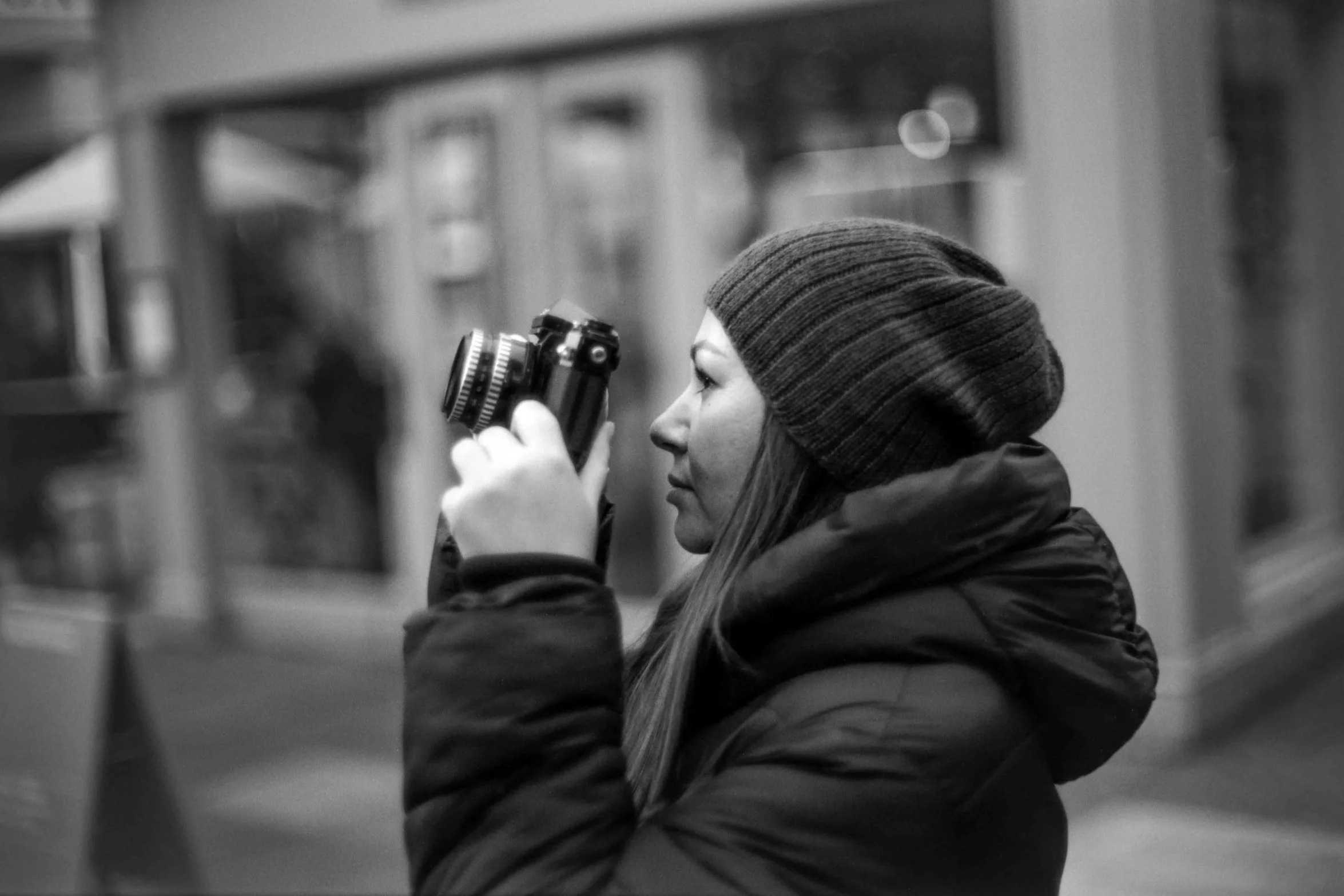
The moment the shutter closes, the photograph is already in the film. What happens next depends on where that roll is developed and scanned. Send your film to Liquid Light Lab and see the full detail your negative recorded.
The Negative Is the Original Photographic Record
When photographic film is exposed and correctly developed, the resulting negative contains a physical record of the light that passed through the camera lens. The film's characteristics, the quality of the optics, exposure and chemical development all influence the information that survives in that record. Fine detail, grain, image density, tonal separation and colour information are established before the negative reaches a scanner.
The negative is therefore more than an intermediate stage between taking a photograph and receiving a digital file. It is the original photographic material from which the image can be reproduced, interpreted and printed.
A scan is a digital representation of that material. The quality of the scanning process determines how accurately the available information is captured and how much flexibility remains when preparing the finished photograph. A weak scan does not necessarily mean a weak negative. Equally, scanning cannot create detail that the camera, lens, exposure or development never recorded.
Understanding this distinction is the starting point for comparing film labs.
Why Do Film Labs Produce Different Scans?
There are two fundamental reasons. The first is technical capture quality: how successfully the scanning equipment records the detail, density and colour information available in the negative.
The second is digital interpretation: how that captured information is converted into an image suitable for viewing, editing or printing.
These differences are often discussed together, but they should be evaluated separately.
Two technically excellent scans can look different because of colour and contrast decisions. Conversely, two scans can have similar colours while differing substantially in sharpness, resolved detail or the amount of information retained. The distinction becomes particularly important when deciding whether to accept a lab's standard scan, request additional editing or use a high-resolution TIFF as the foundation for your own work.
The Technical Factors That Determine Film Scanning Quality
1. Film Flatness and Accurate Focus
Photographic film is not always perfectly flat. Negatives can curl or bow, particularly after drying, cutting or prolonged storage. If film is not held in a consistent plane, some parts of the frame may sit farther from the scanning lens than others.
At high magnification, even relatively small differences can affect sharpness across the image. This is especially important with high-resolution camera-based scanning, where the relationship between film position, macro lens and digital sensor must remain carefully controlled. A scanner may have more than enough pixels to record fine detail, yet fail to achieve its potential if the negative is not properly positioned.
Film flatness and accurate optical alignment are prerequisites for meaningful resolution, and this is more difficult to achieve than it may first appear.
2. Scanning Optics and Optical Alignment
The quality of the lens used to digitise film is just as relevant as the resolution of the digital camera or sensor behind it.
Optical performance determines how effectively fine detail is transferred from the negative to the capture system. An appropriate macro lens must provide sufficient resolving power, suitable magnification and good performance across the image area.
The film and sensor planes must also be accurately aligned. Poor alignment can produce uneven sharpness, while unsuitable optics may reduce contrast or detail towards the edges of the frame.
This is one reason why megapixel figures alone cannot establish the quality of a film scan.
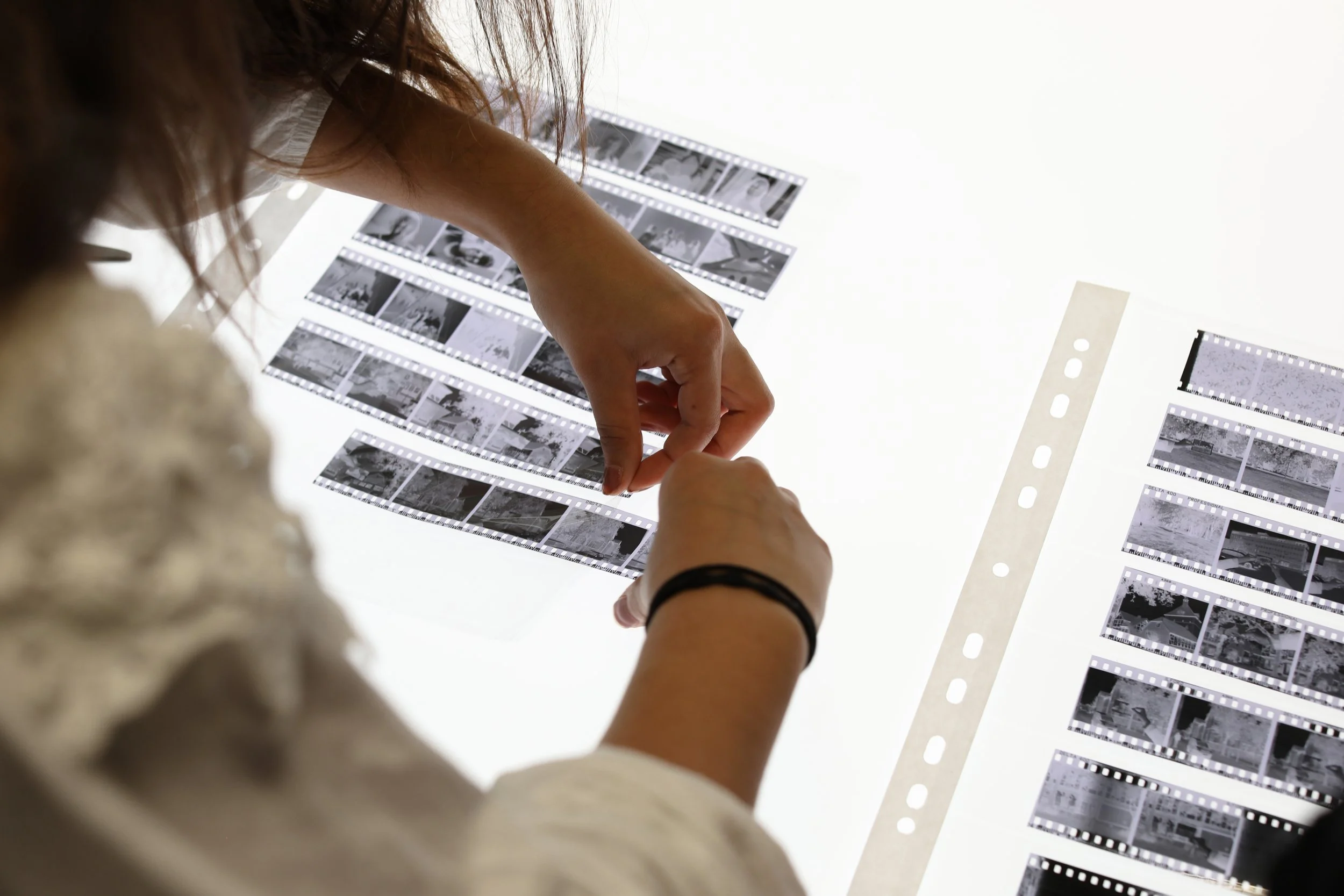
35mm colour negative film awaiting scanning at Liquid Light Lab in the UK. Once processed, the photograph is already present in the negative. Film scanning determines how completely that image is extracted.
3. Illumination and Density Reproduction
A negative is digitised by measuring light transmitted through its different densities. The characteristics of that illumination influence the information the capture system can record. Uniformity matters because inconsistent lighting can introduce unwanted brightness differences across the frame. Spectral characteristics matter because colour-negative dyes and black-and-white image materials interact with light differently.
The scanning system must also handle the range between the clearest and densest parts of the negative without losing useful information to noise or clipping. Where a negative transmits very little light, inadequate capture performance may obscure subtle information in those dense areas.
The objective is not simply to make the negative bright enough to photograph. It is to illuminate and record it consistently, with sufficient information for accurate subsequent reproduction.
4. Resolution and Fine Detail
Resolution is one of the most widely advertised characteristics of film scanning, but it is also one of the most misunderstood. The useful resolution depends on the negative itself, the original taking lens, film grain, camera stability, scanning optics, focus accuracy and the capture system.
A poorly focused high-resolution scan can contain less useful detail than a technically excellent lower-resolution scan. Conversely, a carefully designed high-resolution system can capture fine photographic information that a lower-resolution system may not reproduce adequately.
Resolution should therefore be understood as part of the overall imaging process, not as an isolated measurement of quality.
5. Sharpening, Noise Reduction and Digital Processing
Once the negative has been captured, digital processing introduces another set of variables. Sharpening can improve the apparent definition of an image, but excessive sharpening may introduce halos and exaggerate grain. Noise reduction can suppress unwanted capture noise, but aggressive settings may also remove fine textures. Contrast adjustments can make a photograph appear more dramatic while simultaneously concealing subtle information in the shadows or highlights.
None of these adjustments is automatically wrong. Their suitability depends on the intended result. The important distinction is whether they are being used deliberately to prepare a photograph or whether unnecessary processing is restricting what can subsequently be recovered from the file.
For photographers who intend to edit their own images, retaining a sufficiently detailed, high-bit-depth file is particularly valuable.
Why Do Colours Look Different Between Film Labs?
Colour-negative scanning introduces an additional challenge. Unlike a colour transparency, which can be viewed as a positive image, a colour negative must be converted into its positive representation. The process involves accounting for the film base, interpreting the density relationships of the colour-forming layers and establishing an appropriate colour and tonal response.
Different scanning systems and operators may make different decisions about:
White balance and colour neutrality
Skin tones and overall colour balance
Film-base compensation and negative inversion
Contrast, black point and highlight placement
Saturation and the relationship between individual colours
Sharpening and final image preparation
This helps explain why a photograph scanned by one lab might appear warm and restrained, while another interpretation of the same negative appears cooler or more contrasty.
Those differences do not necessarily indicate that either scan is technically defective. However, creative interpretation should not be confused with the technical quality of the original capture. An excellent film scan begins with a sufficiently accurate record of the negative. Aesthetic decisions can then be made within the limits of that captured information.
At Liquid Light Lab, we believe photographers should have meaningful control over those decisions rather than being restricted to a single finished interpretation.
The Liquid Light Chamber: High-Resolution Scanning, Tonal Depth and Photographic Fidelity
The quality of a film scan cannot be measured by resolution alone. A negative contains far more than fine detail. Subtle transitions between light and shadow, delicate variations in colour, highlight separation and the structure of the film grain all contribute to the photographic image. Capturing these characteristics accurately is just as important as recording the finest details.
The Liquid Light Chamber is Liquid Light Lab's specialist negative scanning system, developed around high-resolution digital capture, precision macro optics and controlled illumination. Accurate film positioning, optical alignment and careful management of the capture process allow us to record the information held within the negative with a high degree of consistency and detail.
Tonal Transitions and the Importance of Bit Depth
One of the most significant differences between digital image files is the precision with which they can represent tonal information. A conventional 8-bit JPEG can represent 256 tonal levels per colour channel. A 16-bit TIFF can represent up to 65,536 levels per channel, allowing much finer numerical distinctions between neighbouring tones.
This matters particularly in photographs containing smooth transitions: the gradual fall of light across a face, subtle differences within shadow areas, delicate highlight gradations or the restrained colour variations found in many negative film stocks.
Higher bit depth does not create information that was absent from the negative or original digital capture. Its advantage is in preserving greater numerical precision when the captured image is processed and edited, reducing the risk of visible banding, posterisation and tonal degradation during substantial adjustments.
For photographers working with colour, contrast and exposure in post-production, this additional flexibility can be especially valuable.
Every Liquid Light Lab development-and-scanning package includes both full-resolution JPEG files and 16-bit TIFF files as standard, without charging separately for the higher-bit-depth format.
The JPEGs are convenient for viewing, sharing and printing. The TIFFs provide a more flexible foundation for photographers who want greater control over their final images.
60MP Standard Scanning and UltraScan 200MP+
Our standard high-resolution scanning service produces images of approximately 9500 × 6300 pixels — around 60 megapixels. This resolution provides substantial scope for fine-detail reproduction, cropping and enlargement. Combined with careful tonal and colour reproduction, it allows photographers to work with both the structure of the negative and the subtleties that give film its distinctive appearance.
For supported medium-format negatives, our UltraScan 200MP+ service uses pixel-shift capture to produce exceptionally detailed files exceeding 200 megapixels, reaching approximately 240MP on suitable larger 120 formats. This additional sampling is particularly useful for fine-art printing, exhibition photography and demanding reproduction work where the original negative contains sufficient detail to justify it.
Capturing Information Before Interpreting the Image
A critical part of our scanning philosophy is recognising the distinction between recording the negative and interpreting it. Colour balance, contrast and tonal adjustments influence how the final photograph looks. But those creative decisions are only as flexible as the digital information available to support them.
High-resolution capture, controlled illumination and high-bit-depth file preparation work together to provide a detailed and flexible starting point. Our objective is not simply to produce a pleasing scan. It is to deliver a technically accomplished digital reproduction that respects the negative's detail, tonal relationships and photographic character, while giving photographers the freedom to make their own creative decisions.
That distinction is fundamental to the way Liquid Light Lab approaches film scanning.

Different negative types demand the same precision at the scanning stage. Whether the film is C-41, ECN-2, or black and white, the final image depends on how accurately the developed negative is examined and extracted.
Beyond Consumer Film Scanning: Digitisation for Museums, Galleries and Archives
The importance of accurate film reproduction extends far beyond personal photography. Museums, galleries, photographic archives, universities, heritage organisations and artist estates hold photographic material that may be historically significant, scientifically useful, artistically important or impossible to replace. For these collections, digitisation has a responsibility that goes beyond producing a visually attractive photograph.
The objective is to create an accurate, consistent and useful digital record of the original material, suitable for preservation, research, cataloguing and future reproduction. This is why Liquid Light Lab also provides a dedicated Museum & Gallery Negative Digitisation service.
Our institutional work applies precision photographic imaging to the requirements of cultural collections, where the original object must remain the reference.
The Archivist: A Dedicated Institutional Imaging System
Our institutional digitisation service uses the Archivist system, designed for accurate capture across a wide range of photographic formats.
The system incorporates precision-engineered film carriers, rigid camera mounting and controlled illumination to maintain accurate film positioning and optical alignment. It supports photographic materials ranging from 35mm negatives and mounted transparencies to 120 medium format and large-format originals up to 8×10 inches, with additional specialist formats assessed individually.
Professional 99 CRI illumination supports the consistent reproduction of colour-sensitive material, alongside the wider colour-management and capture procedures required by each project.
Where necessary, the complete photographic frame can be captured, including film borders, rebates, frame numbers and manufacturer markings.
Such details may be important when identifying, researching or documenting a historical negative.
Unlike a conventional crop prepared solely for photographic presentation, an institutional record may need to retain information beyond the visible composition.
Archival Digitisation Is Not Simply Another Colour Grade
There is a fundamental distinction between preparing a photograph for visual presentation and creating a preservation record.
An exhibition image may require specific colour, contrast or tonal adjustments to suit the intended presentation. An archival master has a different purpose. It must provide a dependable digital reference from which future work can be undertaken.
At Liquid Light Lab, institutional preservation masters are prepared as high-resolution, uncompressed 16-bit TIFF files, with technical specifications established for the project.
Our approach avoids unnecessary aesthetic grading, cosmetic alteration and sharpening in the preservation master.
Separate derivative files can be prepared for exhibition, publication, catalogues or public access, allowing an institution to preserve one carefully controlled digital record while creating different versions for different purposes.
Preservation Requires More Than a High Megapixel Count
Archival digitisation introduces requirements that are less visible in everyday film scanning. These can include agreed colour spaces, ICC profiles, reference targets, consistent capture specifications, image identification, metadata and quality-control procedures.
File naming and delivery structures may need to correspond with an institution's accession numbers or collection-management system.
Handling arrangements can also be important. Scratches, age-related characteristics and original markings may form part of the historical record rather than defects to be removed automatically.
International guidance, including the Federal Agencies Digital Guidelines Initiative's technical guidelines for cultural heritage digitisation, recognises the importance of measurable imaging performance, documented processes and quality evaluation. The specific requirements of an institutional project must be agreed according to the collection and its intended use.
This work demands more than a scanner capable of producing a large file. It requires an understanding of the original photographic material, the imaging process and the responsibilities associated with creating a long-term digital record.
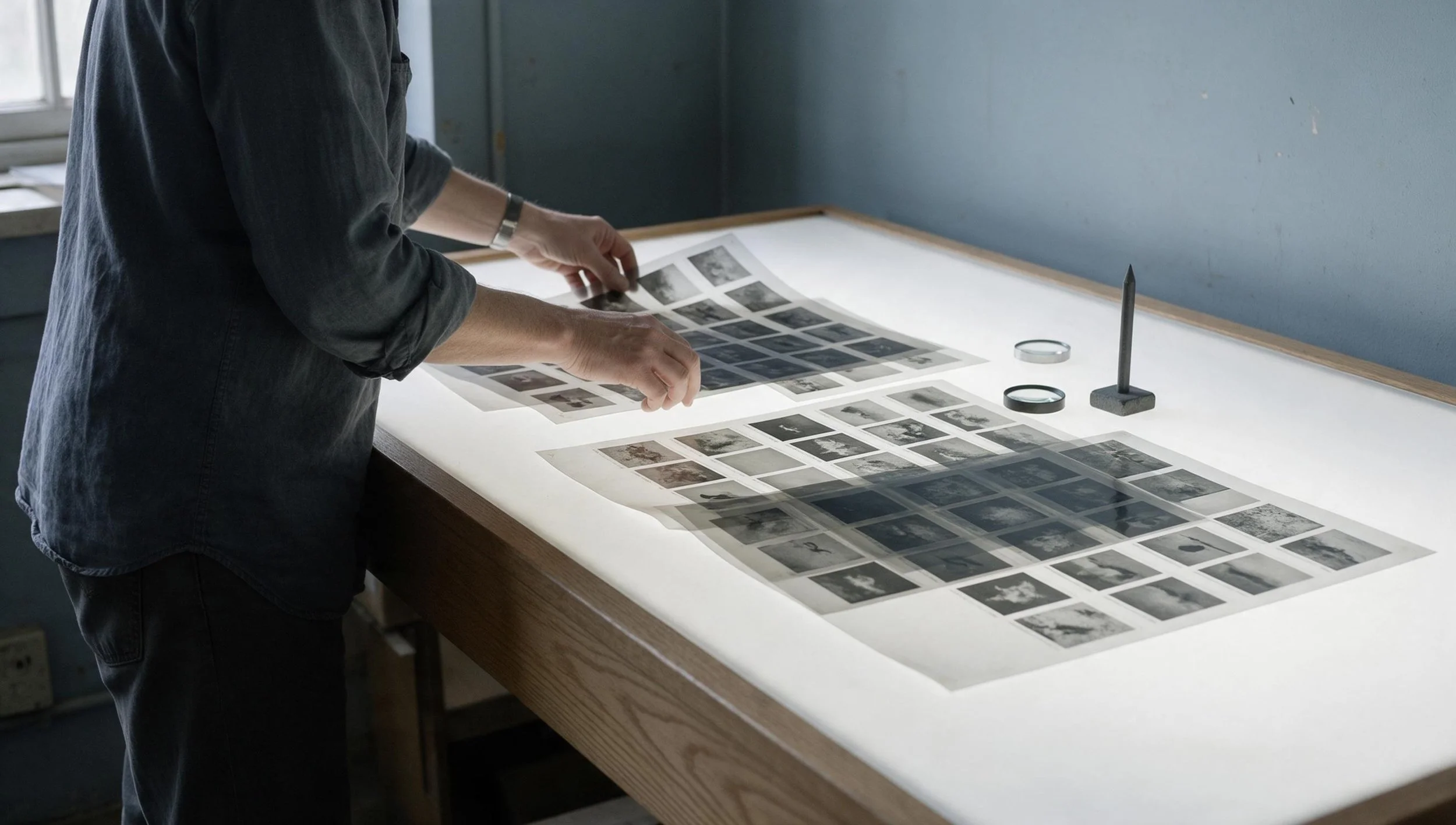
What Institutional Digitisation Demonstrates About Scanning Quality
The relationship between our consumer scanning service and institutional digitisation is important. The Liquid Light Chamber and Archivist are different systems, developed for different applications. They are not interchangeable services, though the underlying imaging principles remain consistent.
Film flatness matters. Optical alignment matters. Controlled illumination matters. The relationship between capture resolution and usable photographic detail matters. Above all, the objective of the capture must be understood before the finished file is prepared.
For an individual photographer, this may mean retaining enough information to make substantial creative adjustments. For a museum or archive, it may mean delivering a preservation master that can support research and reproduction many years into the future.
The technical discipline required for archival digitisation reinforces why scanning quality should be taken seriously at every level of photography.
For institutions responsible for photographic collections, further information is available through our specialist archival film digitisation service for museums, galleries and cultural organisations.
Film Development and Scanning Must Work Together
Even the most capable scanning system depends on the quality of the negative placed in front of it. Film development determines the physical photographic record that remains after processing. The characteristics of that record differ between C-41 colour negative film, ECN-2 motion-picture film and traditional black-and-white emulsions. Each process has its own chemical requirements, and variations in development can influence negative density, contrast and subsequent reproduction.
At Liquid Light Lab, these processes are handled through dedicated workflows. Our C-41 service supports conventional colour negative photography, while ECN-2 processing provides an appropriate development route for compatible motion-picture colour negative films.
For black-and-white photography, we use specialist chemistry including 510 Pyro, whose staining characteristics introduce additional considerations when interpreting the finished negative. We explore those relationships further in 510 Pyro Film Development: Why Liquid Light Lab Chooses This Chemistry.
Our wider technical work also includes investigations into Kodak VISION3-derived films and the implications of changes to their construction, such as those discussed in Why Kodak VISION3 AHU Film Changes Bleach Bypass.
These examples illustrate why photographic chemistry cannot be considered separately from the quality and characteristics of the negative that will eventually be scanned.
Correct exposure, appropriate processing and capable digitisation are connected stages of the photographic workflow. None can entirely compensate for fundamental information lost during another.
Why Choose Liquid Light Lab for Film Developing and Scanning?
Liquid Light Lab was established from a background in professional photography, bringing together practical experience behind the camera and specialist knowledge of film development and digital imaging. That experience influences how we approach the negatives entrusted to us.
Our scanning services are built around precision imaging equipment rather than relying on file size or automated correction as measures of quality.
For photographers, we provide professional 35mm and 120 film developing, approximately 60MP standard scans, optional 200MP+ medium-format UltraScan and included high-resolution JPEG and 16-bit TIFF delivery with scanning packages.
For museums, galleries and cultural institutions, we offer separately commissioned digitisation using the Archivist system, with preservation masters and technical deliverables specified according to the collection.
Both services reflect our understanding that a photograph is more than its final appearance on a screen. It is the result of a physical recording process, and the information within that original deserves to be handled with care.
Our approach is informed by professional photographic experience, specialist film processing and a commitment to understanding the technical decisions that affect the finished image.
You can learn more about our background and working philosophy on the About Liquid Light Lab page.
-
Differences can arise from scanning resolution, optical quality, illumination, film positioning, negative inversion, colour management and editing decisions. Some affect the amount of information captured; others affect how that information is presented.
-
No. Higher pixel counts provide more sampling, but useful detail also depends on the original negative, scanning optics, accurate focus and the capture system. A well-executed scan is more important than megapixel count alone.
-
Yes. Colour-negative inversion and grading involve decisions about white balance, contrast, tonal response and colour interpretation. The same negative can support more than one reasonable rendering.
-
Yes. For editing, 16-bit TIFF files offer greater tonal precision and avoid JPEG compression losses. JPEGs remain practical for viewing, sharing and printing. Their suitability depends on what you intend to do with the photographs.
-
Yes. Institutional digitisation places particular emphasis on consistent capture, accurate recording of the original material, preservation masters, agreed file specifications and long-term usability. Images intended for exhibition or publication can be prepared separately.
-
Our standard consumer scanning is offered as part of our film development and scanning packages. Standalone digitisation is available for museums, galleries and other eligible institutions through our separately scoped archival service.
-
Yes. We provide mail-in film developing and scanning for customers across the UK, with local 24-hour film drop-off available in Leamington Spa.
Your Negative Deserves More Than a Good-Looking Scan
A photograph can be beautifully exposed, carefully developed and still be poorly represented by an inadequate digital capture. Equally, an accurate high-resolution scan provides photographers with a stronger foundation for making their own creative decisions.
The distinction between technical fidelity and aesthetic interpretation is central to understanding why different film labs produce different results.
At Liquid Light Lab, we bring professional film development together with high-resolution scanning, while our separate institutional digitisation service extends that precision imaging approach to the preservation of photographic collections.
Whether you're sending a roll of 35mm film or responsible for a collection of historically significant negatives, the principle remains the same: the original photographic material deserves an imaging process appropriate to its value and intended use.
For photographers: Explore Professional Film Developing & Scanning at Liquid Light Lab.
For museums, galleries and cultural institutions: Discover Our Archival Negative Digitisation Service.
The Cinematic Notebook | Liquid Light Lab
Professional film photography, processing and digitisation.