


Archival Film Digitisation for Museums, Galleries & Cultural Institutions
Preserving photographic collections with accuracy, exceptional detail and long-term accessibility.
Liquid Light Lab provides specialist photographic film digitisation for museums, galleries, heritage organisations, universities, archives and artist estates throughout the UK.
Our institutional imaging service is designed for collections where accurate reproduction, preservation of original material and reliable digital records are essential.
Using high-resolution digital capture, precision film handling and professional 99 CRI illumination, we create detailed archival master files for conservation records, curatorial research, collection management, publication and exhibition.
From individual historically significant negatives to substantial photographic collections, each project is planned around the original material and the technical requirements of the institution.
Preservation Begins with Accurate Capture
Photographic archives contain more than images. They hold historical, artistic and documentary information that must remain accessible long after the original material has become too fragile for regular handling.
Effective digitisation must preserve that information without introducing unnecessary interpretation.
Our approach prioritises:
Faithful reproduction of the original photographic material
Preservation of fine detail, grain structure and tonal relationships
Consistent colour and density reproduction
Careful handling and secure return of original film
High-resolution, non-destructive digital master files
Documented file structures suitable for long-term institutional use
We distinguish preservation masters from images prepared for display or publication. The original photographic record remains the reference, while separately prepared derivatives can support curatorial or public-facing requirements.
The objective is to create enduring digital assets that remain useful as technology, research priorities and collection management systems evolve.
Precision Imaging Archivist System
Our specialist digitisation workflow is a dedicated Archivist system, engineered for high-resolution reproduction of photographic film across a wide range of formats.
The system uses precisely machined film carriers, rigid camera mounting and carefully controlled illumination to maintain optical alignment and film flatness during capture.
Importantly, the carriers allow the entire photographic image area, including film borders and rebates where required, to be recorded. These surrounding details can provide valuable historical and technical evidence, including manufacturer markings, frame numbering and information about the original photographic process.
Our 99 CRI illumination provides exceptionally high colour-rendering fidelity, supporting consistent, colour-managed capture of photographic originals.
Combined with high-resolution digital imaging and controlled processing, this enables detailed records that preserve fine photographic texture, density transitions and subtle image information.
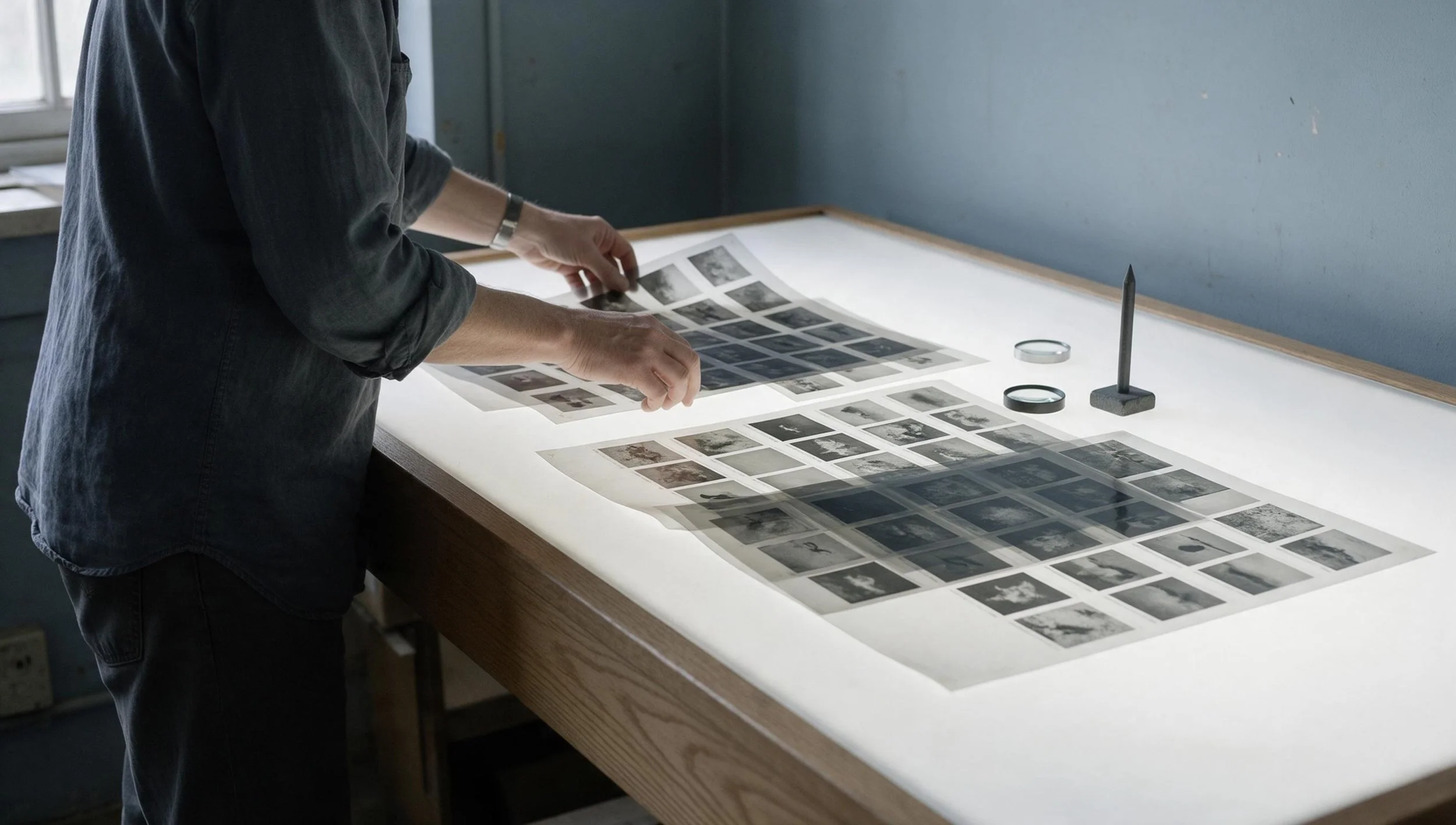
From 35mm to Large Format
Our Archivist system accommodates an extensive range of photographic negatives, colour transparencies and reversal films, including:
35mm: Colour and black-and-white negatives, mounted slides, individual frames, film strips and panoramic formats.
120 medium format: Negatives and transparencies in 6×4.5, 6×6, 6×7, 6×8 and 6×9cm formats.
Large-format sheet film: Negatives and transparencies in 4×5, 5×7 and 8×10 inches.
Specialist panoramic formats: Including 6×12, 6×17, 6×24cm and 4×10-inch film.
Historical and non-standard material: Selected unusual film sizes, mounted transparencies and specialist photographic originals, assessed individually.
The system's precision-engineered carriers support accurate positioning and film flatness, with the ability to capture the complete photographic image area and surrounding borders or rebates where required.
This flexibility makes it particularly suitable for institutional collections containing a mixture of negatives, large-format colour transparencies, individual photographic originals and archival material produced across different periods and photographic processes.
We can assess collections containing mixed formats, individual frames and historically important material that requires more considered handling than conventional roll-film scanning.
Capture arrangements and achievable output resolutions are established for each format and project.
Archival Master Files Designed for Long-Term Preservation
Digitisation is only as useful as the files it produces.
Liquid Light Lab prepares institutional image files for preservation, research and future reproduction, with specifications agreed before work begins.
Preservation Masters — 16-bit TIFF
High-resolution, uncompressed 16-bit-per-channel TIFF files provide substantial tonal information for archival storage, analysis and future image preparation.
Masters are prepared with controlled tonal reproduction and without unnecessary aesthetic grading, sharpening or cosmetic alteration. Where requested, the photographic borders and full image area can be retained.
Colour-management arrangements, including embedded ICC profiles and the required output colour space, can be established as part of the project specification.
Access and Publication Files — JPEG and TIFF
Separate derivative files can be prepared for collection management systems, catalogues, researchers, digital exhibitions and public access.
These may include:
Full-resolution JPEG files
Smaller access and reference images
Publication-ready TIFF or JPEG files
Colour-corrected exhibition derivatives where required
This separation allows the institution to preserve a dependable master while using purpose-specific files for presentation, reproduction or access.
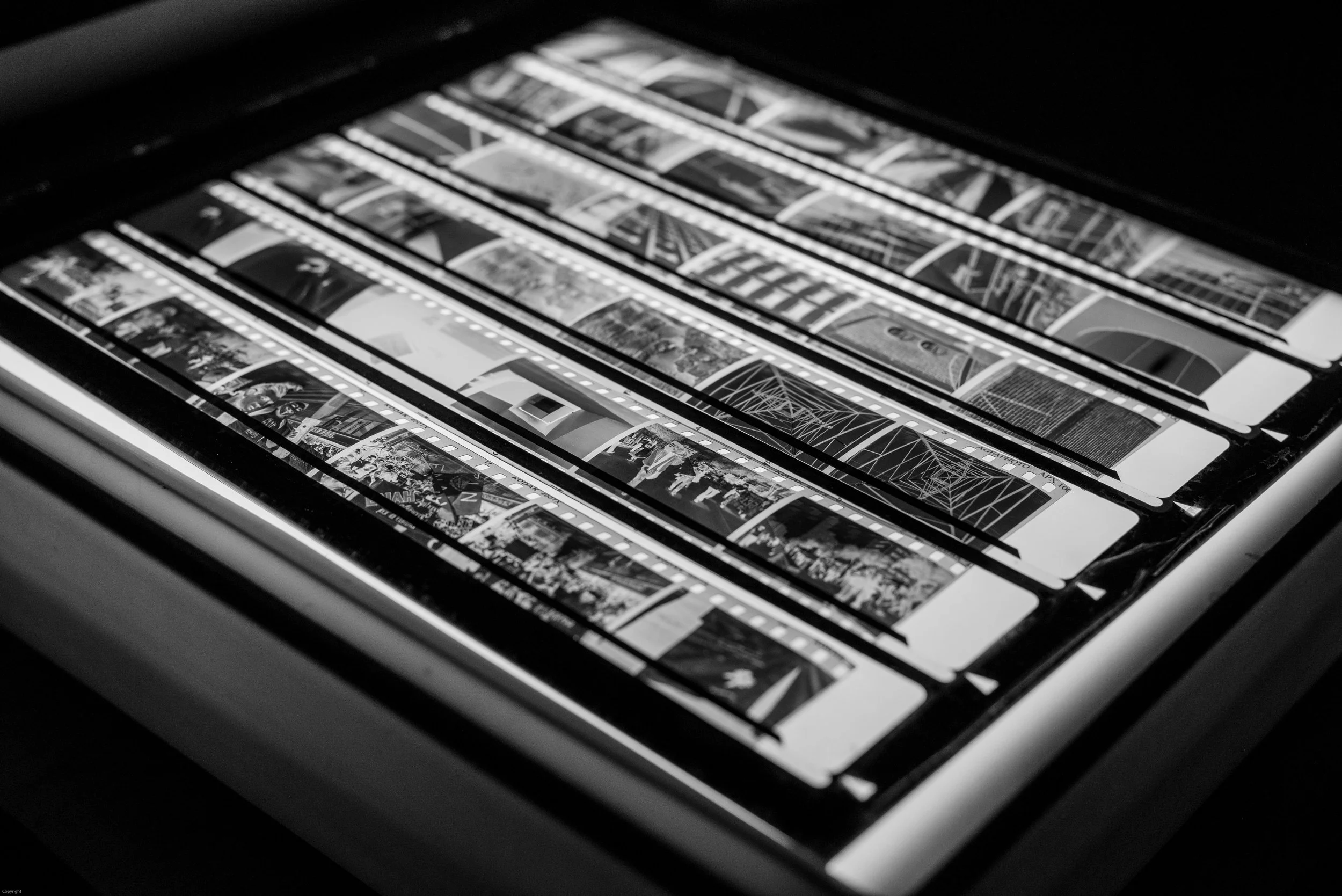
File Naming, Metadata and Collection Integration
Institutional digitisation must work within the organisation's existing collection structure.
We can agree file naming conventions based on accession numbers, catalogue references or established institutional identifiers.
Delivery can be structured around collection sequences, agreed folder hierarchies, asset identifiers and associated metadata requirements, allowing files to be incorporated into existing digital archives and collection management systems.
High-Resolution Capture and Colour Fidelity
Our imaging approach combines high-resolution camera capture with carefully controlled film positioning and illumination.
For 35mm material, our established capture workflow produces files of approximately 9500 × 6300 pixels, or 60 megapixels.
Larger photographic formats can be assessed for higher-resolution capture, with the appropriate imaging method determined by the dimensions, detail and intended use of the original.
The Archivist system provides precise film positioning and full-frame capture capability across supported formats.
With a colour rendering index of 99, the illumination system provides a high-fidelity light source for the reproduction of colour-sensitive material.
We approach colour and tonal reproduction as an integral part of the archival workflow, not as an opportunity to apply a preferred photographic style.
For collections requiring defined colour spaces, reference targets, validation or other documented imaging controls, these requirements should be agreed during technical scoping.
Digitisation for Collections, Conservation and Research
Our service is intended for organisations responsible for the long-term stewardship of photographic material.
Museums and Heritage Collections
Digitisation of historically significant photographic negatives and transparencies for preservation records, collection access, research and interpretation.
Galleries and Artist Estates
High-resolution reproduction of original photographic works and archives, including negatives held for exhibition planning, catalogue production, scholarly research and estate management.
Universities and Research Institutions
Digitisation of photographic holdings for academic research, teaching collections, digital repositories and specialist study.
Archives and Cultural Heritage Organisations
Structured imaging projects for collections requiring consistent capture, traceable identification, organised digital deliverables and reduced handling of original materials.
Projects can range from selected works of particular historical or artistic importance to larger collections requiring consistent specifications across many individual assets.
Careful Handling of Original Photographic Material
Original negatives and transparencies are often irreplaceable.
We treat handling and preservation as central parts of the digitisation process.
Each collection is assessed for format, physical presentation and relevant handling considerations before imaging begins. Film carriers are selected to provide stable support and minimise unnecessary contact with the photographic surface.
We do not regard scratches, ageing, edge markings or other original characteristics as defects to be automatically removed from a preservation master.
Where restoration or presentation work is required, this can be considered separately from the preservation record.
Collection-specific requirements for packaging, identification, transport and return are agreed before the project is commissioned.
A Digitisation Workflow Built Around Your Collection
Every institution has different preservation priorities, collection structures and delivery requirements. We therefore scope archival projects individually.
1. Collection assessment
We establish the type, format, condition and approximate volume of the material, alongside its intended archival, research or publication use.
2. Technical specification
We agree capture requirements, resolution, file formats, colour-management expectations, file naming and any relevant metadata or quality-control requirements.
3. Controlled digitisation
Material is captured using the appropriate archival imaging configuration, with attention to film flatness, full-frame coverage, focus, detail and tonal reproduction.
4. Quality review and file preparation
Images are reviewed against the agreed specification, organised according to the collection structure and prepared for institutional delivery.
5. Delivery and return
Digital files are supplied through an agreed delivery method, with the original photographic material returned according to the project's handling and transport arrangements.
For larger or technically demanding collections, an initial sample capture can be considered to establish the required output before the main project is undertaken.
UK Archival Film Digitisation — Based in Leamington Spa
Liquid Light Lab is based in Royal Leamington Spa, Warwickshire, providing specialist photographic digitisation services to museums, galleries, archives and cultural institutions across the United Kingdom.
We welcome enquiries from institutions in Birmingham, Coventry, Oxford, Stratford-upon-Avon, the West Midlands and nationally.
Projects are quoted individually according to collection size, photographic format, handling requirements, resolution and deliverable specifications.
Discuss Your Collection with Liquid Light Lab
Whether you are preparing a photographic archive for long-term preservation, digitising an artist's negatives for a forthcoming exhibition or undertaking a wider museum collection project, we can help define an imaging approach appropriate to your material.
Tell us about your collection, the formats involved and the digital outputs you require.
We can discuss a technical specification, handling arrangements, delivery requirements and a quotation tailored to the project.
Request an Institutional Digitisation Consultation
Email: team@liquidlightlab.co.uk
Telephone: 03305 201771
Royal Leamington Spa, Warwickshire, United Kingdom.
