

Black-and-white film development involves more than choosing a developer and following a standard time and temperature. The chemistry influences the density, grain structure, apparent sharpness and tonal characteristics of the finished negative.
At Liquid Light Lab, we use 510 Pyro, a specialist staining developer formulated by Jay DeFehr and manufactured by Zone Imaging in the UK. Unlike conventional non-staining developers, 510 Pyro produces a proportional image stain alongside the developed silver image, influencing how the negative reproduces its tones during printing and scanning.
The formulation is particularly valued for its fine-grain characteristics, high acutance and highlight separation. It is designed to work with both conventional black-and-white emulsions and modern T-grain films.
Our black-and-white development service combines this chemistry with controlled processing and high-resolution camera scanning, delivering JPEG and 16-bit TIFF files when scanning is selected.
For photographers throughout the UK, the result is access to specialist black-and-white development through a straightforward postal film lab service.

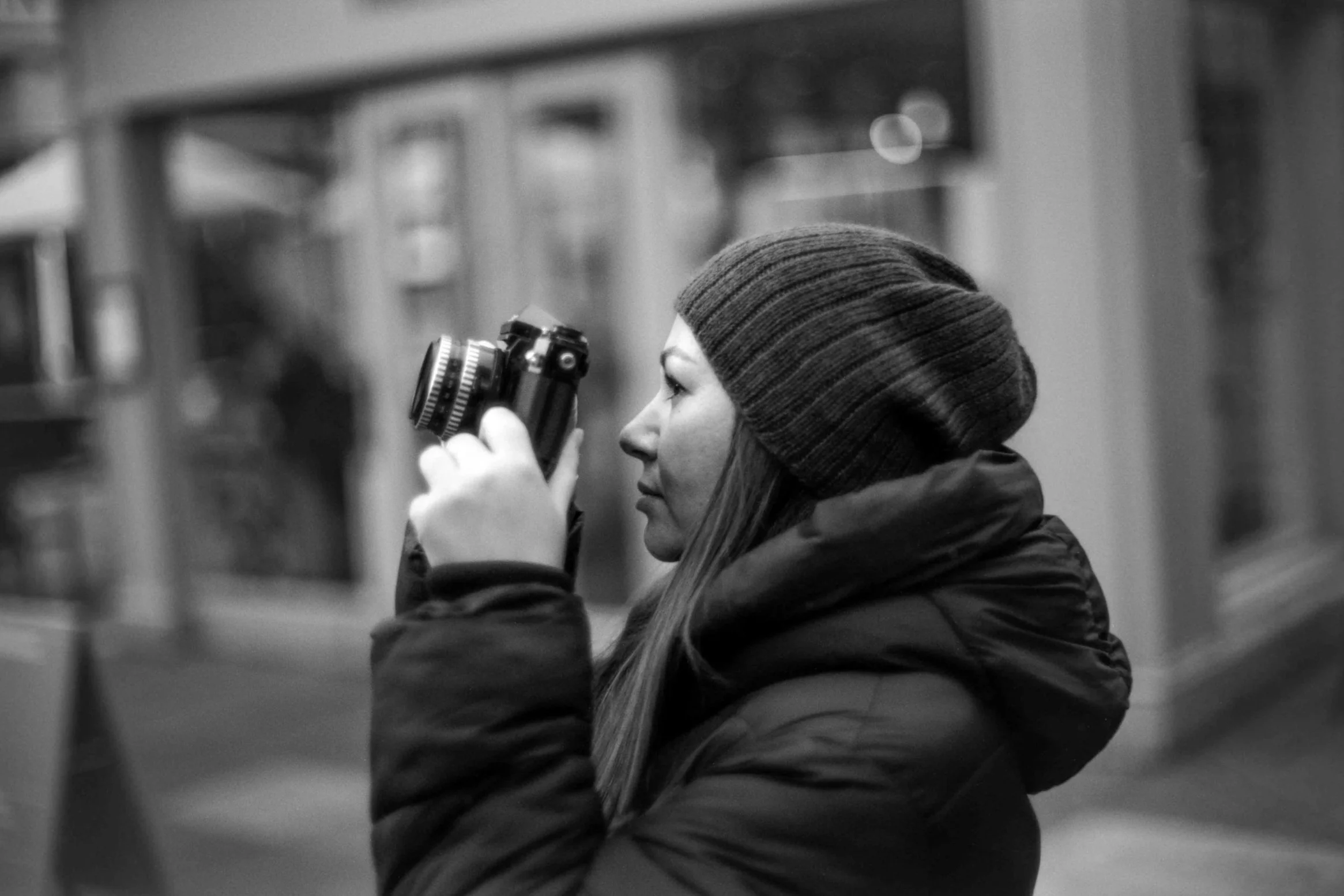
Black and white portrait on film, showing the tonal separation, clarity, and stronger final result that specialist 510 Pyro development can produce.
Why We Develop Black & White Film in 510 Pyro
Black-and-white photography is shaped by decisions made long before a negative reaches the scanner. Exposure, film emulsion and development chemistry each contribute to the final image, and the choice of developer has a significant influence on how the exposed film is rendered.
At Liquid Light Lab, we use 510 Pyro, a specialist staining developer formulated by Jay DeFehr and produced by Zone Imaging. Its combination of fine grain, high acutance and proportional image staining makes it an interesting choice for photographers who value tonal control and the characteristics of traditional silver-based photography.
But what makes 510 Pyro different from more conventional black-and-white developers, and why have we chosen it for our lab?
What Is 510 Pyro?
510 Pyro is a highly concentrated black-and-white photographic developer based on pyrogallol, a developing agent with a long history in analogue photography.
Unlike conventional non-staining developers, 510 Pyro produces a coloured image stain alongside the metallic silver image during development. The amount of stain formed is associated with the developed silver density, which is why the process is described as proportional staining.
This stain contributes to the negative's optical density and influences how different wavelengths of light pass through it. The result is a negative whose reproduction characteristics depend on both its silver image and its stain, particularly when printed using photographic enlargers or digitised using different scanning systems.
What Does Staining Development Actually Do?
One of the distinguishing characteristics of 510 Pyro is the relationship between developed silver and image stain. The silver image carries the photographic information recorded by the film. The additional stain changes the way that information is transmitted through the negative when light passes through it.
In traditional silver-gelatin printing, the colour of the stain can influence effective contrast because photographic papers have different spectral sensitivities. In digital scanning, the effects depend on the illumination, sensor response and how the resulting image is interpreted.
Staining is therefore not simply a way of making negatives denser or more dramatic. It introduces another characteristic that must be understood and managed when producing the final photograph.
Grain, Acutance and Fine Detail
510 Pyro is valued for combining fine-grain characteristics with high apparent sharpness. Acutance describes the perceived sharpness of edges and transitions within an image. It is not the same as resolution, although the two can influence how much detail appears to be present in a photograph.
The interaction between developer formulation, film emulsion and development conditions affects grain appearance and edge definition. These properties can be particularly attractive in photographs containing fine textures, architectural detail, landscapes and carefully lit portraits.
Why Liquid Light Lab Uses 510 Pyro
The decision to use 510 Pyro was based on its photographic characteristics and its suitability for our approach to black-and-white film development. We wanted a developer that could handle a range of traditional and modern emulsions while offering consistent processing, good tonal reproduction and the characteristics associated with staining development. 510 Pyro provides the most useful combination of properties without requiring every film to be treated identically.
Ilford HP5 Plus, Kodak Tri-X, Ilford FP4 Plus and modern tabular-grain emulsions have different sensitometric characteristics. Exposure and development need to account for those differences.
Our approach is to respect the characteristics of the film rather than impose one visual style on every roll. This matters particularly when negatives will be scanned and subsequently edited. We want to deliver files that retain flexibility for the photographer's own interpretation.
Black and white film developed in 510 Pyro, showing the kind of clarity, tonal depth, and finished image quality Liquid Light Lab is built to return.
Working With Zone Imaging
Zone Imaging produces 510 Pyro and provides technical information on its formulation, characteristics and use. Our relationship with Zone Imaging forms part of Liquid Light Lab's wider engagement with specialist photographic chemistry and the people developing it.
For us, using 510 Pyro is not simply a question of selecting an unusual developer. It involves understanding how the chemistry behaves, applying it appropriately to different films and evaluating the resulting negatives.
This connection between photographic practice and technical knowledge is fundamental to the way Liquid Light Lab operates.

Black and white film developed in 510 Pyro, returning strong highlight control, rich and wide tonal range, and a finished image with depth.
From 510 Pyro Negatives to High-Resolution Scans
A well-developed negative is the starting point for a high-quality digital photograph. Our Liquid Light Chamber scanning system uses high-resolution camera-based capture and precision macro optics to digitise processed film.
Standard scans provide approximately 60MP of resolution, with both full-resolution JPEG and 16-bit TIFF files included in our development-and-scanning packages.
The TIFF files provide substantial flexibility for photographers who prefer to make their own adjustments to contrast, tone and overall presentation.
The challenge with scanning staining negatives is to reproduce their tonal information accurately while accounting for the characteristics of the stain. Scanner illumination, sensor spectral response and digital interpretation can all influence the appearance of the resulting image.
Understanding those interactions is part of our work. Development and scanning are separate processes, but the quality of the finished digital photograph depends on how effectively they are brought together.
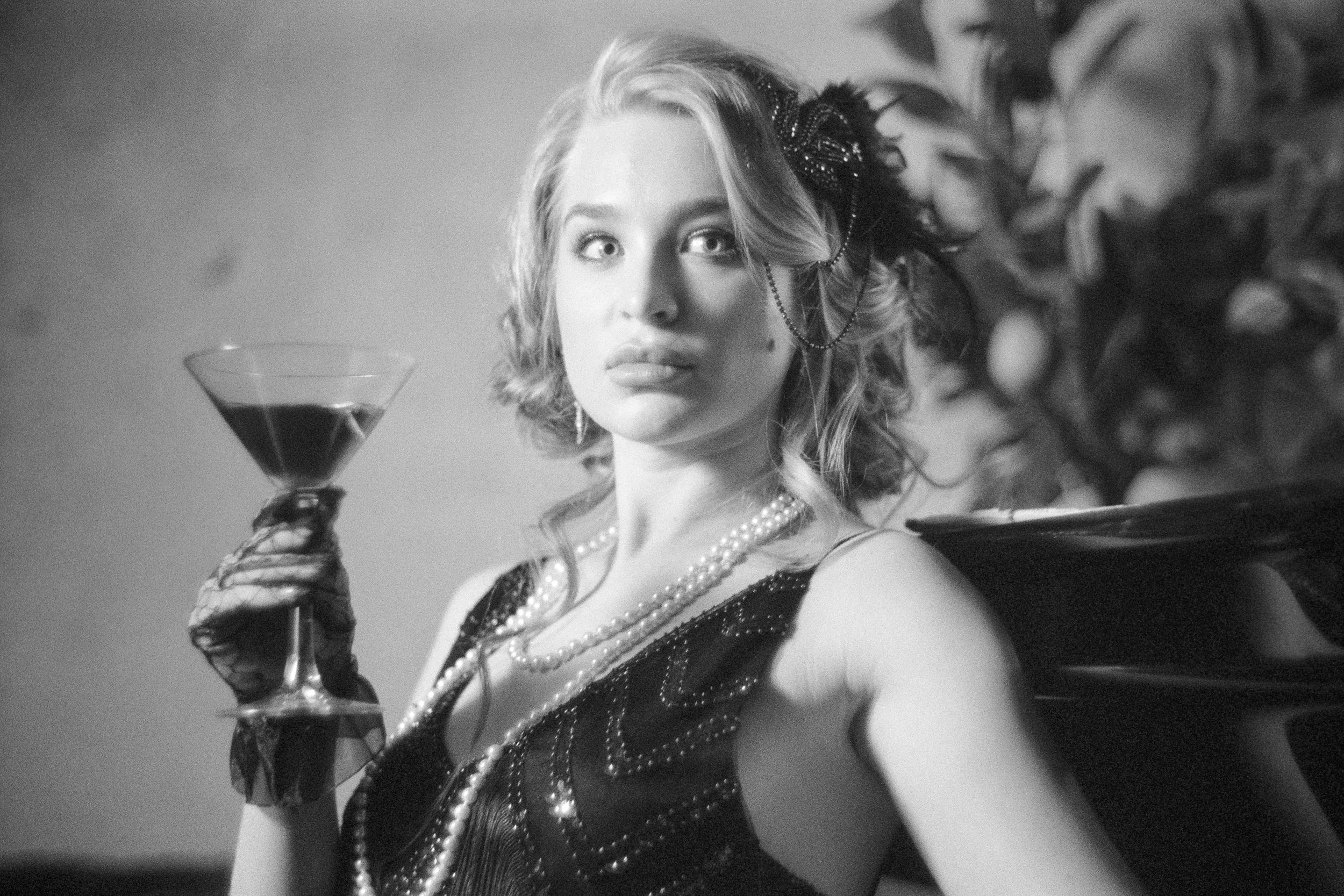
Black and white film developed in 510 Pyro for customers who want a stronger final image from portrait work, personal projects, and other important rolls.
Which Black-and-White Films Can Be Developed in 510 Pyro?
510 Pyro can be used with a wide range of conventional black-and-white films, including popular emulsions from Ilford, Kodak and other manufacturers.
Different films respond differently to the chemistry, so appropriate development conditions are important.
Traditional cubic-grain films such as HP5 Plus and Tri-X can exhibit different characteristics from tabular-grain films such as T-MAX and Delta.
There is no single ideal combination for every photographer. The choice of film, exposure and intended photographic result all matter.
We also undertake specialist work with selected motion-picture-derived films, including experiments with Kodak VISION3-derived emulsions developed as monochrome negatives.
These alternative processes are distinct from conventional black-and-white development and are explored separately in The Cinematic Notebook.
Professional 510 Pyro Film Development in the UK
Liquid Light Lab offers specialist black-and-white film developing for photographers throughout the United Kingdom. Our service includes 35mm and 120 medium-format processing, with high-resolution scanning available as part of your order.
Every scanning package includes full-resolution JPEG and 16-bit TIFF files, allowing you to enjoy your photographs immediately or undertake further editing.
Whether you're shooting your first roll of Ilford HP5 Plus or working on a larger photographic project, our focus remains on carefully processed negatives and accurate digital reproduction.
Explore Black & White Film Developing & Scanning at Liquid Light Lab
The Cinematic Notebook | Liquid Light Lab
Professional film photography, processing and digitisation.