

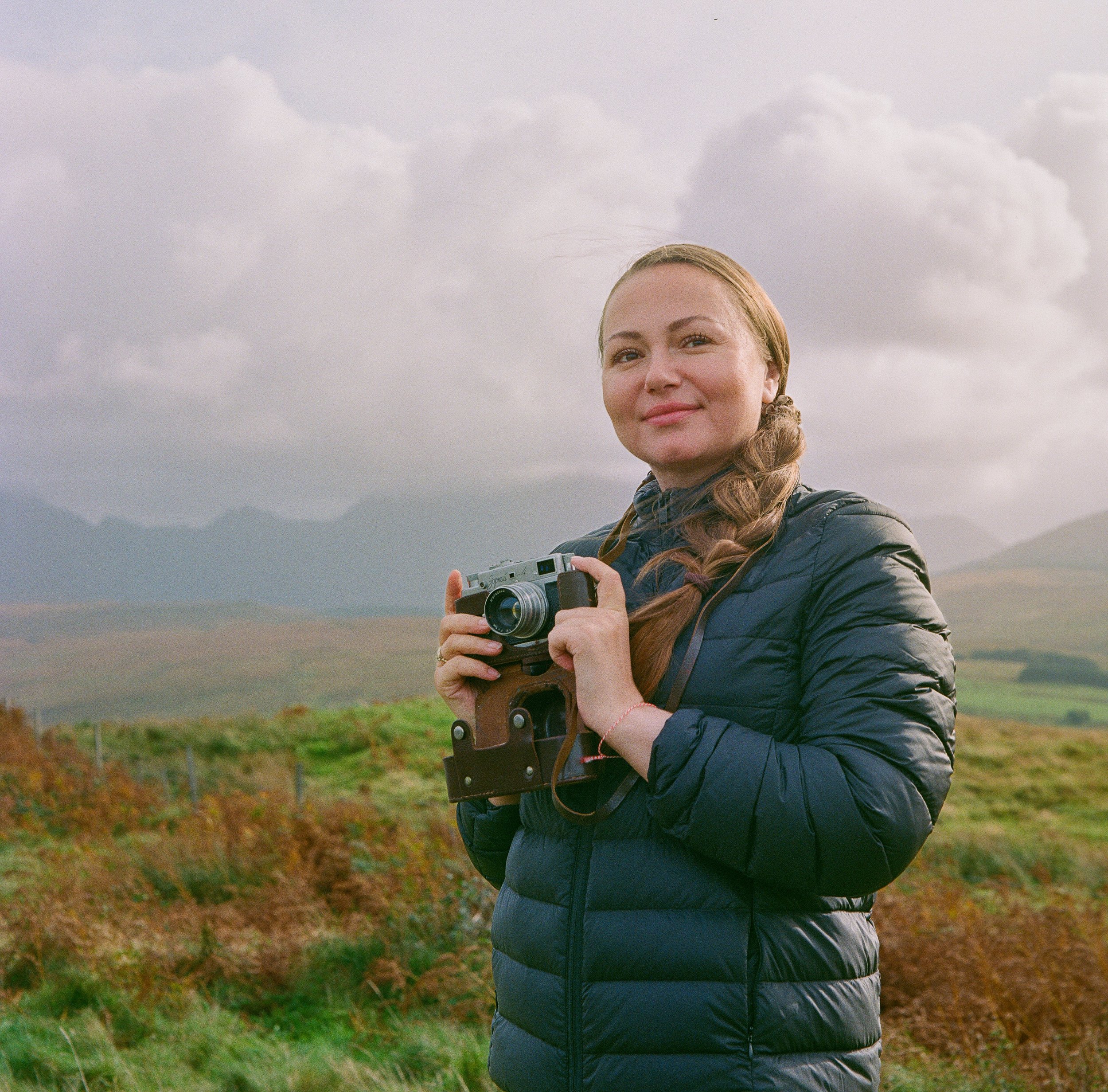
Pulled two stops to ISO 100, this frame shows how Lomography 400 softens under reduced development. The highlights remain open, the colour stays clean, and the tonal transitions reflect the precision of Liquid Light Lab’s fresh-chemistry workflow.
Push and pull film processing changes the way a negative is developed after exposure. It is one of the most effective ways to shape density, contrast, highlight behaviour, and tonal separation in film, but it only works when exposure and development are treated as one decision.
This guide explains how push and pull processing works across C-41, ECN-2, and black and white film, and how Liquid Light Lab handles push and pull processing in the UK through fresh chemistry, precise timing, and high-dynamic-range scanning.
What Push and Pull Processing Is
Push processing means exposing film at a higher exposure index than its rated speed, then extending development to compensate. Pull processing means exposing film at a lower exposure index than its rated speed, then reducing development to suit.
This is where confusion often begins. If a roll of ISO 400 film is metered at 800 but developed normally, that is underexposure, not push processing. If a roll of ISO 400 film is metered at 200 but developed normally, that is overexposure, not pull processing. Push and pull only become real when development is changed to match the exposure decision.
For photographers sending film to Liquid Light Lab, that means the requested push or pull is added easily during the order process.
Why Photographers Push or Pull Film
Photographers push film when they need more effective speed or want a denser, more contrast-driven negative. They pull film when they want to restrain contrast, protect highlights, or keep the tonal structure more open where exposure conditions allow it.
These are not cosmetic adjustments added after the fact. They change the way the negative is built in development, which is why push and pull processing belongs in the lab workflow, not only in camera-side exposure choices.
How Pushed and Pulled Film Behaves
Push processing changes the negative's density and contrast by extending development, but it does not increase the film's inherent sensitivity by the same number of stops.
When a 400-speed film is exposed at EI 1600, it receives two stops less light. Additional development increases density most effectively in the more strongly exposed regions, particularly the midtones and highlights. The deepest shadows, which received comparatively little exposure, cannot recover information that was never recorded.
The resulting negative typically exhibits stronger contrast, more prominent grain and, with colour film, potentially altered colour relationships.
Pull processing works differently. By combining additional exposure with reduced development, photographers can lower negative contrast and restrain density growth in the highlights. This can produce a longer, more restrained tonal scale, although the result depends on the emulsion and its response to the chosen adjustment.
Neither technique is inherently superior to normal development. Push and pull are deliberate photographic tools, and their value depends on exposure, film choice and the intended result.
How Push and Pull Processing Differs Between C-41, ECN-2 and Black & White Film
Although the principle of adjusting development is shared across the three processes, the photographic consequences are not identical.
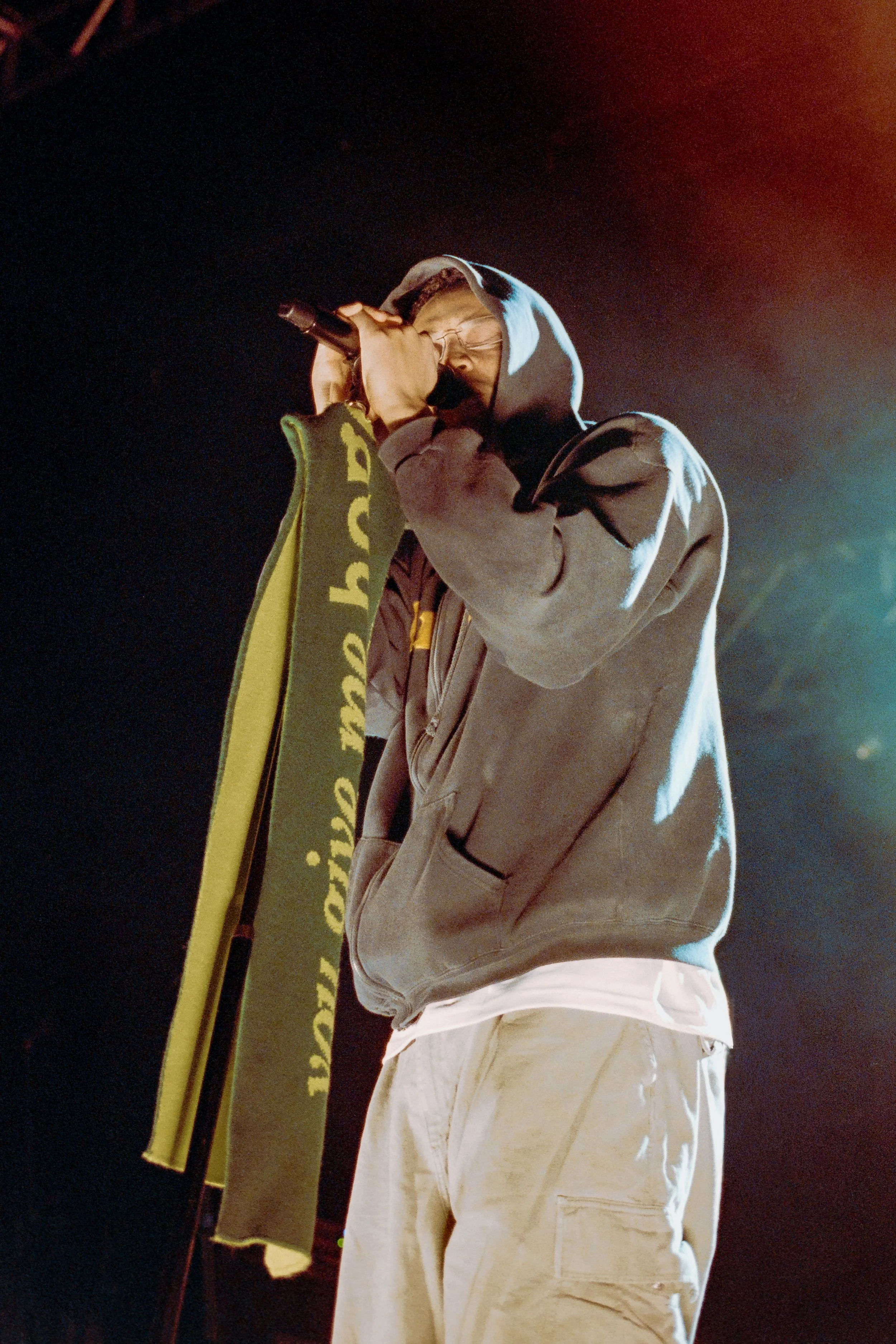
Kodak Portra 400 exposed at EI 1600 and pushed two stops at Liquid Light Lab. The photograph shows its colour and contrast under stage lighting. Image kindly supplied by Liquid Light Lab customer Jay West, @jxywst.
C-41 Colour Negative Film
Push processing increases development activity relative to the normal process, commonly producing higher contrast, greater density in the more strongly exposed areas and changes in colour balance. The effects depend on the film stock, the degree of underexposure and the adjustment made during development.
Pull processing generally reduces contrast and the rate of density development, which can be useful when the film has received additional exposure.
Because colour-negative film contains multiple dye-forming layers, adjustments can influence the relationship between colour records as well as overall contrast.
ECN-2 Motion-Picture Film
Kodak VISION3 and other compatible motion-picture negative films have characteristic curves designed to retain substantial photographic information for subsequent reproduction and grading. Push and pull development changes those characteristics.
Kodak's published research shows that ECN-2 push processing can increase granularity, raise contrast and introduce colour-record imbalances. The effective gain in photographic speed can be substantially smaller than the requested push adjustment.
Pull processing can reduce contrast and granularity while introducing its own changes to colour response.
For photographers using VISION3, the decision to push or pull should therefore consider both the required exposure and the way the resulting negative will be scanned and graded.
Traditional Black & White Film
Black-and-white films offer considerable flexibility through the relationship between exposure, developer formulation, development time and agitation. Extending development generally increases contrast, particularly through the midtones and highlights. Reducing development can restrain contrast and highlight density when additional exposure has been given. The results vary according to the film and developer.
At Liquid Light Lab, our black-and-white work includes 510 Pyro, a specialist staining developer whose characteristics require an informed approach to development and subsequent scanning.
Across all three processes, the important principle remains consistent: push and pull processing alters the negative itself, and the choice should be made according to the film, exposure conditions and intended photographic result.
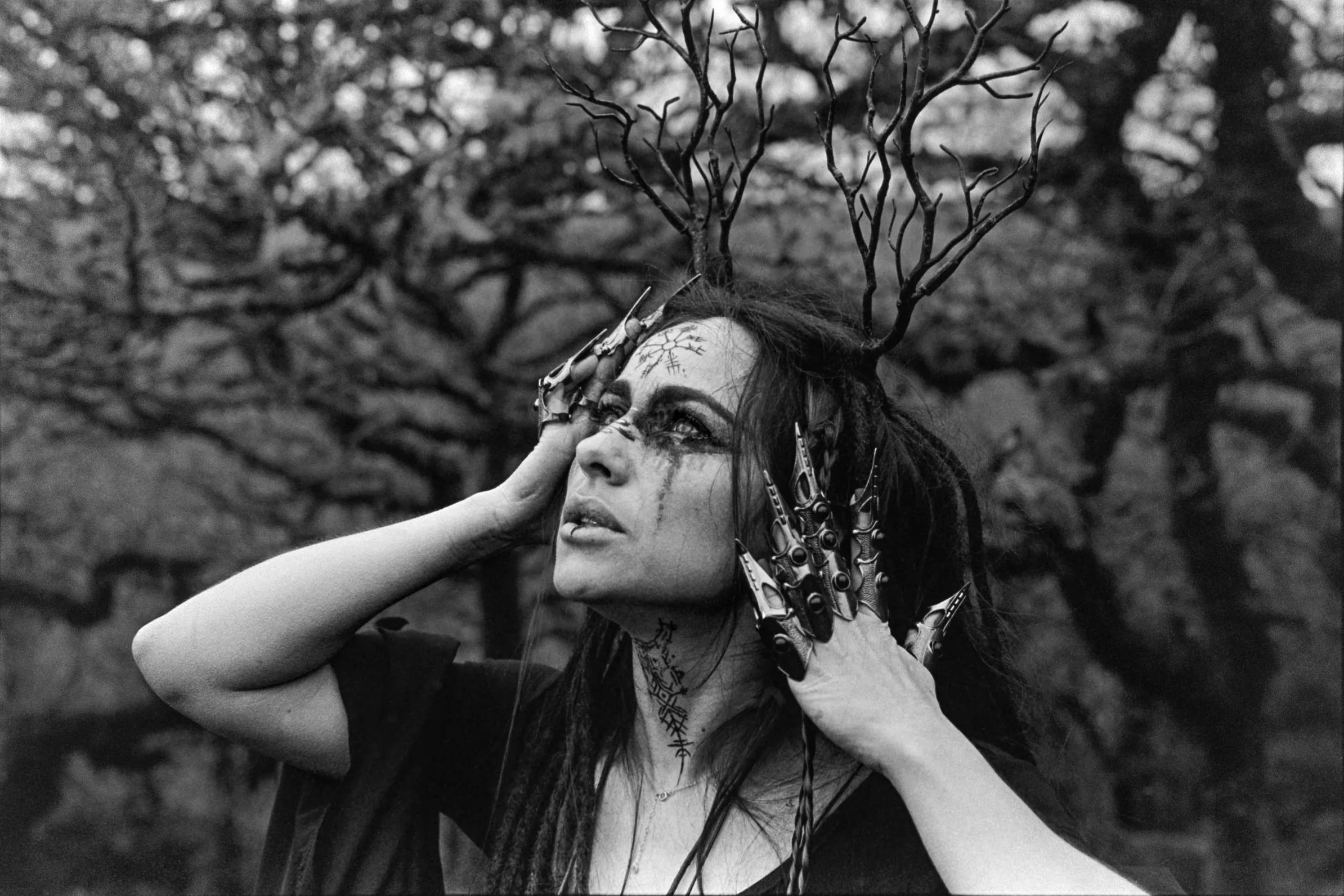
Kodak Double-X pushed one stop, photographed on the Leica M5. The extended development lifts the midtones and tightens the contrast while the film’s highlight structure remains intact, shaped through Liquid Light Lab’s fresh-chemistry workflow.
With black and white film, push and pull decisions can be even more expressive because the relationship between developer, agitation, exposure, and tonal design is more visibly tied to the final negative. At Liquid Light Lab, 510 Pyro is our core black-and-white developer, with development controlled according to the film stock, exposure and requested push or pull.
When Push or Pull Processing Makes Sense
Push processing makes sense when the scene demands more effective speed than the film would otherwise give, or when the visual aim benefits from stronger contrast and denser upper values. Pull processing makes sense when the negative has been given more exposure and the aim is to control density and keep tonal behaviour more open.
The decision should begin with the scene and the intended negative, not with habit. Push and pull are useful because they make development part of the photographic decision rather than leaving the roll to a generic process.
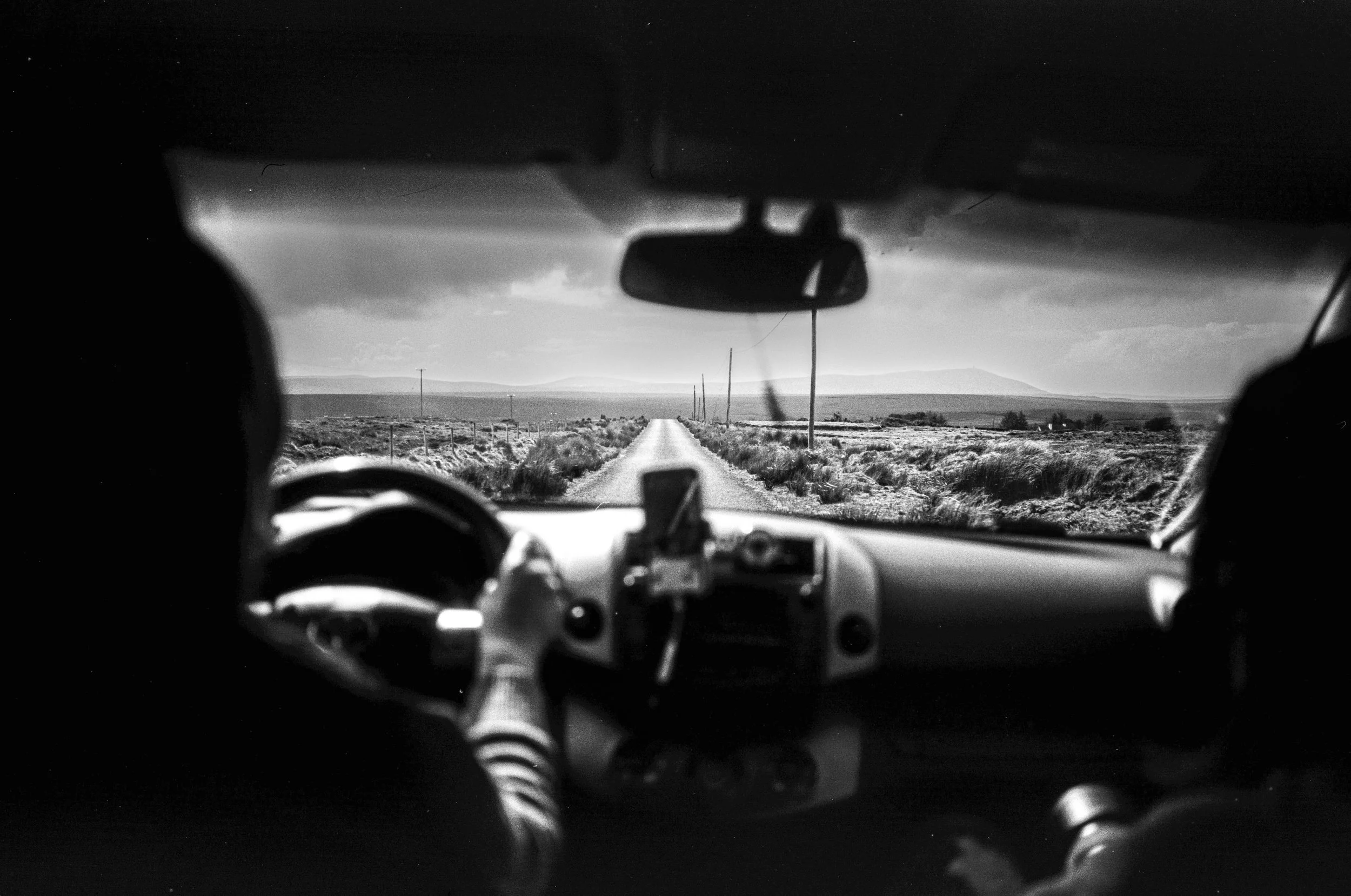
Babylon 13 pulled one stop to ISO 6. Reducing development softens the contrast and preserves the highlights across the landscape, giving this road scene a long tonal scale shaped entirely in Liquid Light Lab’s fresh-chemistry workflow.
How Liquid Light Lab Handles Push and Pull Processing
At Liquid Light Lab, push and pull processing is handled as a controlled lab decision, not as a generic add-on. That means fresh chemistry, stable timing, process-appropriate agitation, and scanning designed to read the resulting negative properly rather than flattening it into standardised retail-style output.
This matters because a pushed or pulled negative does not behave like a normally processed roll. It carries a different density structure, different contrast behaviour, and different highlight and shadow demands. If chemistry is tired, timing is loose, or the scan is generic, the result will not show the value of the development decision clearly.
Liquid Light Lab processes C-41 colour negative, ECN-2 motion-picture film, and black and white film with the requested adjustment. For orders that include scanning, we digitise the resulting negative and deliver full-resolution JPEG and 16-bit TIFF files.
Professional Push and Pull Film Development at Liquid Light Lab

Kodak Aerocolor 100 pulled one stop to ISO 50. Reducing development softens the contrast and opens the highlights, giving the frame a smoother tonal register shaped through Liquid Light Lab’s fresh-chemistry workflow.
Liquid Light Lab offers push and pull processing for supported C-41, ECN-2 and black-and-white films through our UK-wide postal service. Development adjustments are made according to the film stock, the requested number of stops and the requirements of the processing chemistry. Our approach is informed by professional photographic experience and practical knowledge of sensitometry, negative density and film scanning.
For photographers choosing a development-and-scanning package, negatives are digitised through our high resolution scanning system, with both full-resolution JPEG and 16-bit TIFF files included. This is particularly useful with pushed or pulled negatives, where changed density and contrast characteristics can make accurate tonal reproduction more demanding.
How to Request Push or Pull Processing
Choose your film developing service and select the appropriate adjustment during checkout. For example, Kodak Portra 400 exposed at EI 800 would normally be submitted for a +1 push, while the same film exposed at EI 200 with the intention of reduced development would be submitted for a −1 pull.
The adjustment applies to the entire roll, so photographers should plan their exposure index accordingly.
If you're uncertain which adjustment is appropriate for your film or intended result, contact the lab before sending it.
Explore Film Developing & Scanning at Liquid Light Lab
The Cinematic Notebook | Liquid Light Lab